Top 24 Workable Alternatives to Improve Candidate Hiring & Tracking
Noxx Team

Recruiting teams know the right software can make or break hiring efficiency, candidate quality, and team productivity. If Workable feels limiting, whether due to feature gaps, pricing, integrations, or scaling challenges, there are plenty of strong alternatives on the market. This guide explores the top Workable alternatives across applicant tracking systems, recruitment automation, and HR tech, helping you find a platform that better supports faster hiring, more innovative sourcing, and a smoother recruiter and candidate experience. Keep reading to learn how to Hire Offshore Developers
One standout option is Noxx’s AI recruiter, which streamlines sourcing and screening with automation that identifies stronger applicants, reduces time-to-hire, and allows recruiters to focus on meaningful candidate interactions instead of repetitive admin.
Table of Contents
- Why It’s Time to Consider a Workable Alternative
- Top 24 Workable Alternatives for Intuitive Recruiting
- Upload a Job and Get 10 Candidates within 7 Days with Noxx (No Risk, No Upfront Fees)
Why It’s Time to Consider a Workable Alternative
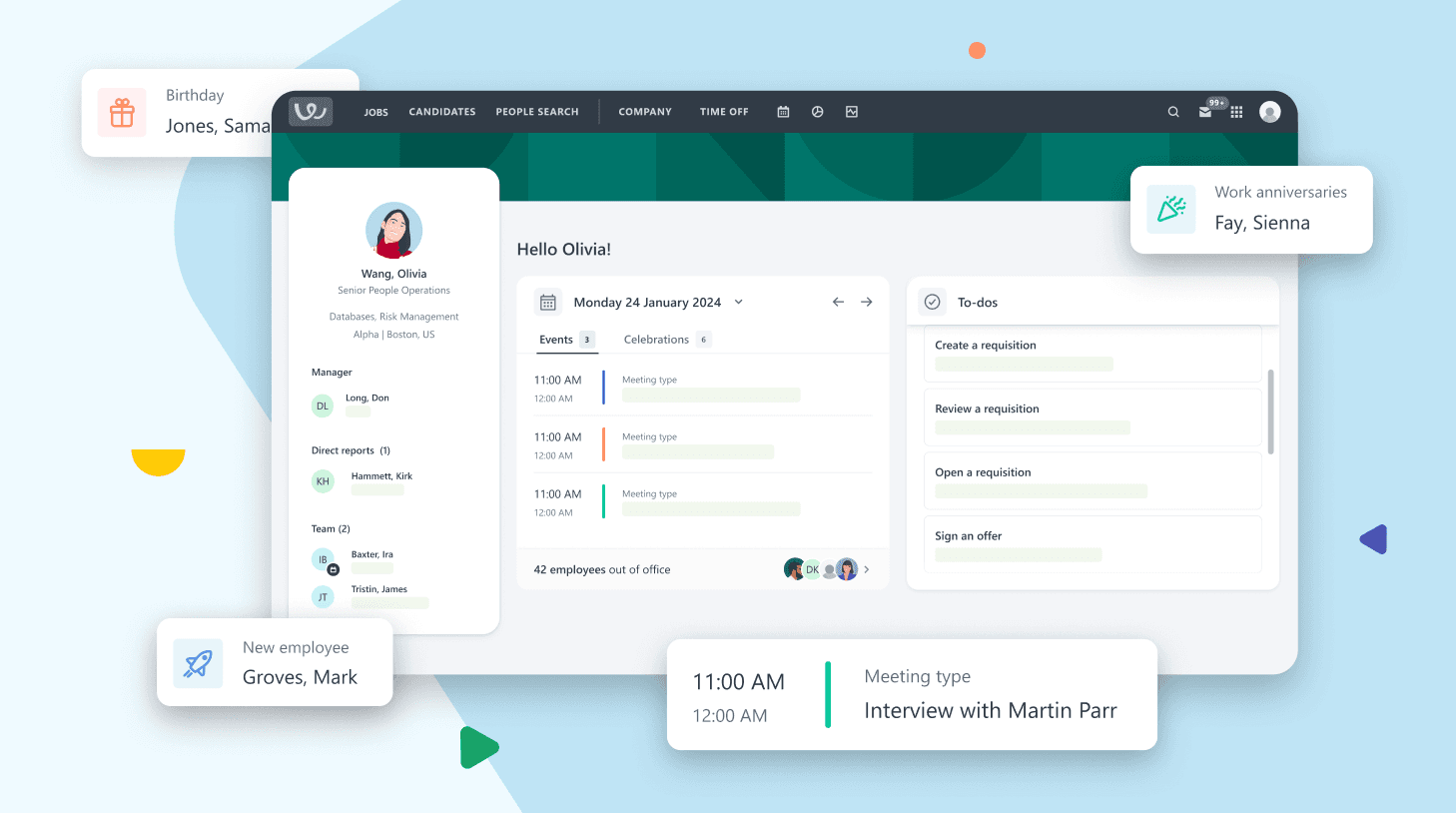
Workable is an applicant tracking system and HR platform built for small and mid-sized companies that need a simple, modern way to hire. It bundles recruiting, candidate tracking, AI-powered sourcing, a mobile app, and HRIS or payroll connections into a single system. Teams choose Workable for its intuitive interface and affordable plans. Still, hiring teams often look for other options when these factors become priorities:
- Cost
- Deeper feature needs
- Complex workflows
- Enterprise integrations
Why Teams Like Workable
Hands down, Workable earns praise for being affordable, easy to learn, and modern. The platform covers sourcing to offer management, while adding:
- AI features
- HRIS integrations
- A native mobile app
Recruiters and hiring managers value the low friction from posting to screening and the straightforward administration that keeps daily work moving.
Core Features That Matter
- Job posting and distribution: Post jobs to over 200 free and premium job boards simultaneously, expanding your reach quickly.
- Multi-language hiring: Translate job posts, applications, and offers into six languages to support global hiring and attract multilingual candidate pools.
- No code careers page builder: Build a branded, mobile-friendly careers site with custom layout, colors, fonts, and media to match employer brand.
- Candidate database and AI sourcing: Utilize AI-powered matching to identify likely candidates and manage talent pools within a single recruiting CRM.
- Collaboration and communication tools: Sync calendars and email, share profiles, set role-based permissions, and run virtual interviews with Zoom, Google Meet, and Teams.
- Automation and workflow: Automate repetitive tasks with custom email templates, candidate SMS messaging, and hiring pipelines tailored to standard processes.
- Payroll integration: Generate payroll reports, automate calculations, and sync with major providers like ADP and Xero for multi-state and multi-country payroll needs.
When Workable Becomes a Bottleneck
- Scaling and agencies: Workable can feel limiting for organizations that hire at high volume or run multiple hiring teams. As headcount and hiring complexity grow, the platform’s simplicity may create friction for advanced reporting, shared pipelines, and agency-style workflows.
- Customization limits: Companies that require deep workflow customization, unique approval gates, or complex permissions often hit the product ceiling. Custom fields, bespoke forms, and tailored candidate journeys are not as flexible as some competitors.
- AI performance gaps: Workable’s AI-powered tools still need refinement. Several users report missed matches or inconsistent candidate ratings, which forces manual review and extra screening work.
- Application design and employer brand: The application layout is basic and may not effectively showcase the employer brand. For roles that attract top talent, a richer candidate experience and branded application flow matter.
What to Look for in Workable Alternatives
- Scalability and performance: Seek systems built for high candidate volume and many concurrent users. Look for recruiting platforms that maintain speed and reliability as headcount, openings, and integrations grow.
- Greater workflow customization: Prioritize tools that enable you to build custom pipelines, incorporate conditional logic, define approval steps, and assign roles that align with your company's actual hiring processes.
- Advanced AI and automation: Favor vendors that show continuous model improvements, transparent candidate scoring, and automation that reduces manual screening without raising false negatives.
- Better employer branding and candidate experience: Choose a solution with flexible application forms, rich job pages, and a careers site editor that reflects company culture and improves conversion.
- Deep integrations and API access: Confirm integration coverage with HRIS, payroll, calendar, sourcing tools, background checks, and Single Sign On. Robust APIs help connect recruiting data to finance and people ops.
- Recruitment CRM and sourcing features: Look for talent pools, proactive sourcing workflows, outreach sequencing, and analytics that let you reuse candidates and measure channel efficiency.
- Reporting and analytics: Ensure the ATS supplies customizable dashboards, funnel metrics, time-to-hire breakdowns, and exportable data for people operations and finance.
- Security and compliance: Check data residency, role-based access, audit logs, and compliance features for hiring across regions.
Questions to Ask While Comparing Applicant Tracking System Alternatives
- How many hires per month will you process, and how many users need concurrent access?
- Which HR systems, payroll providers, or background check vendors must integrate with your ATS?
- Do you need custom approval gates, multi-team pipelines, or agency partner workflows?
- How vital is branded candidate experience versus speed of deployment?
- How will you validate AI candidate recommendations, and what controls do you need for bias and accuracy?
- What reporting will finance and people ops require, and how do you plan to extract that data?
Which hiring problem are you currently solving, and which of these features would make an immediate impact on your day-to-day operations?
Related Reading
- Hire Offshore Developers
- How to Recruit Engineers
- Recruitment Process Outsourcing
- Recruitment Automation Trends
- How to Recruit Tech Talent
- Best Company Hiring Practices
- Types of Recruitment Agencies
- Benefits of Outsourcing Recruitment and Selection Process
- How to Recruit IT Talent
- Strategic Recruiting
- Top 10 Recruiting Apps
Top 24 Workable Alternatives for Intuitive Recruiting
1. Noxx: Hire the Right Person in Days, Not Months
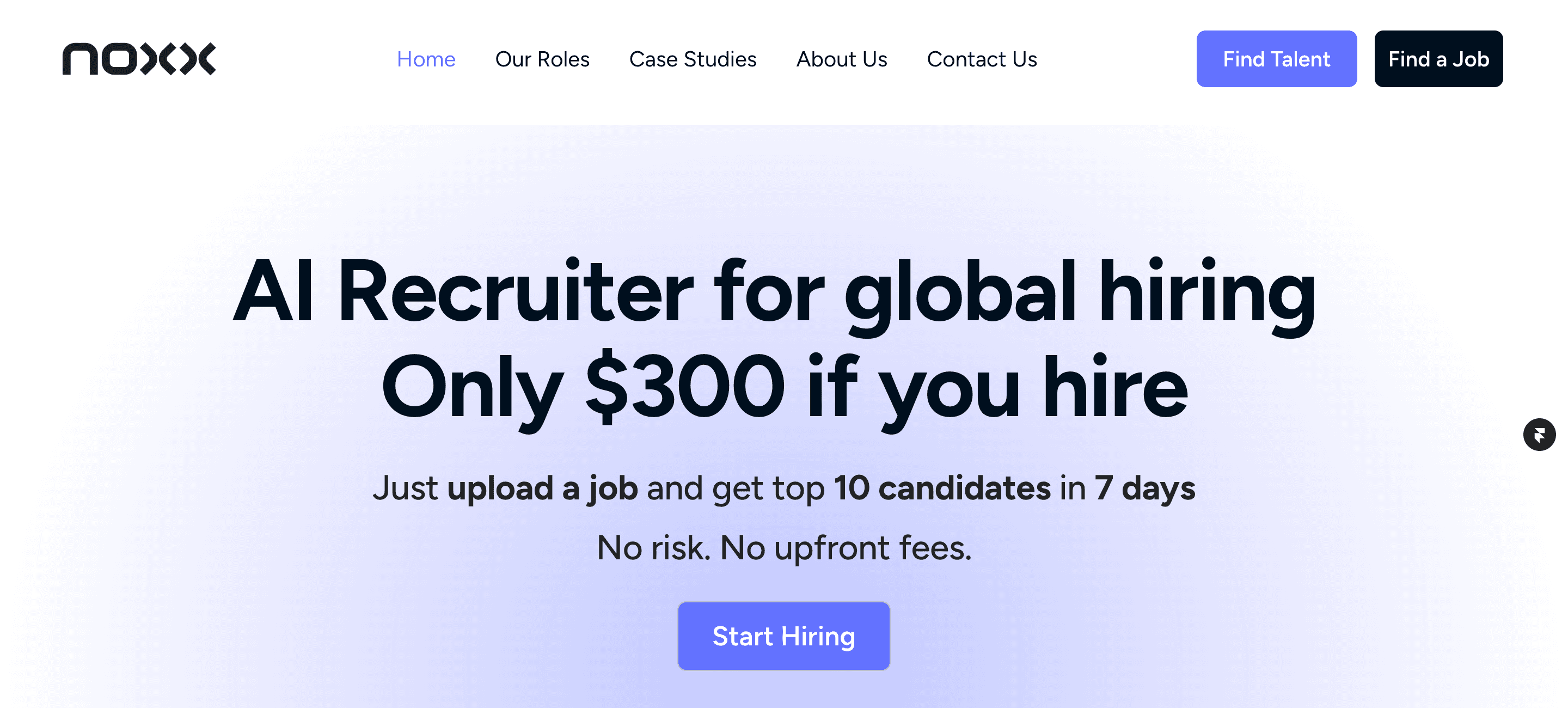
Noxx uses AI to screen large applicant pools automatically and surface the best fits for your roles. It is an AI recruiter that finds top candidates fast and affordably. It serves startups and growing teams that need engineers, marketers, and sales professionals without paying hefty upfront recruiter fees. The platform screens over 1,000 applicants, shows salary expectations up front, and returns a ranked top 10 within seven days so hiring teams can move from posting to offer quickly.
Why Noxx Is A Good Workable Alternative
Compared with Greenhouse, Noxx focuses on speed and cost efficiency over deep hiring program management. Where Greenhouse emphasizes structured interview workflows and integrations, Noxx replaces lengthy sourcing and screening with automated candidate discovery and fee‑only‑on‑hire pricing. If you're looking for an applicant tracking alternative that eliminates heavy sourcing work and reduces hiring costs, Noxx offers a practical, transactional model and direct candidate readiness.
Features
- AI screening of 1,000+ applicants
- Salary expectation display
- Top 10 ranked candidates in 7 days
- Pay‑only‑on‑hire pricing
Integrations
- Job description upload
- Applicant import
- Candidate communication tools
Pros
- Extremely low upfront cost and risk
- Fast time to shortlist
- Clear salary transparency for candidates and hiring teams
Cons
- Less focus on long-term employer brand management
- Fewer enterprise integrations than mature ATS platforms
2. Kula: Centralize Hiring with Automation and a Clean Dashboard
Kula is an ATS and recruiting CRM built to automate sourcing, outreach, scheduling, and scoring. It is an all-in-one ATS that speeds hiring up to five times. It suits growth companies that need a single place to run campaigns, engage passive candidates, and manage pipelines without adding multiple tools. Core strengths include sourcing automation, AI interview intelligence, and natural language reporting for quick insights.
Why Kula is a Good Workable Alternative
Kula offers an intuitive UI and monthly AI model audits that keep scoring accurately, which contrasts with Greenhouse’s focus on structured workflows. For teams switching from Workable, Kula adds stronger automated outreach and a conversational analytics layer to query hiring performance faster than typical ATS reporting.
Features
- Sourcing automation and CRM
- AI interview intelligence and scoring
- Built-in scheduling
- Conversational AI reporting
Integrations
- GitHub
- Calendar sync
- ATS sync
- Major data vendors
Pros
- Strong automation across sourcing and outreach
- Easy for non-technical users
- Regular AI tuning for accuracy
Cons
- May require setup to align scoring with company competencies
- Advanced customization can add configuration time
3. Greenhouse: Structure Interviews and Reduce Bias in Hiring
Greenhouse provides tools for creating repeatable hiring processes, collaborative scorecards, and robust job and candidate management for companies scaling hiring. It is best for structured hiring processes. It serves mid-sized and enterprise teams that need consistent evaluation and compliance controls. Strengths include scalable workflows, candidate engagement channels, and an ecosystem of integrations.
Why Greenhouse is a Good Workable Alternative
As an alternative to Workable, Greenhouse emphasizes structured interviewing and fairness, helping teams standardize scorecards and feedback. Compared to other options, Greenhouse offers deeper workflow controls and established integrations that help organizations formalize hiring practices while maintaining a consistent candidate experience.
Features
- Structured interview workflows
- AI sourcing tools
- A candidate texting solution
Integrations
- Indeed
- Glassdoor
- ZipRecruiter
- Slack
- Docusign
- Google Calendar
- Outlook
- Zoom
- Asana
Pros
- Strong support for structured, fair hiring
- Broad partner ecosystem
- Scalable for enterprise needs
Cons
- Implementation requires process discipline
- Cost can grow with enterprise feature usage
4. Deel: Hire Anywhere While Handling Compliance and Pay
Deel helps companies hire employees and contractors in:
- 150+ countries
- Handling contracts
- Taxes
- Payroll compliance
It is best for global talent hiring and payroll. It serves companies expanding internationally or building remote teams who need country-specific employment support. Core strengths lie in global payroll, legal compliance, and recruiter networks for local sourcing.
Why Deel is a Good Workable Alternative:
When compared to Greenhouse, Deel focuses less on structured interview frameworks and more on enabling compliant global employment after you find talent. As an alternative to Workable, Deel offers payroll and contractor management features that Workable lacks, making it a better fit for teams requiring global hiring and post-hire administration.
Features
- Multi-currency payroll
- Contract templates
- Tax and visa support
- Onboarding and offboarding workflows
Integrations
- QuickBooks
- Slack
- Google Workspace
- BambooHR
- Workday
- Brex
- Xero
Pros
- End-to-end global hiring and payroll support
- Reduces legal and payroll friction across countries
- Network of vetted local recruiters
Cons
- Not focused on interview workflow design
- Pricing can reflect local compliance service levels
5. Manatal: Tailor Your ATS to Match Your Hiring Brand
Manatal blends AI candidate recommendations, social media enrichment, and customizable career pages to support recruiters and hiring managers. It is best for customizing recruitment workflows. It serves agencies and mid-sized companies that want configurable application forms and intelligent shortlists. Strengths include easy branding, resume parsing, and candidate scoring that adapts to your process.
Why Manatal Is A Good Workable Alternative
Versus Greenhouse, Manatal emphasizes customization and aggressive AI recommendations while keeping costs predictable. As a Workable alternative, Manatal provides teams with more design control over career pages and applicant forms, while also offering strong social enrichment to surface candidate details more quickly.
Features
- Candidate scoring and recommendations
- Real-time collaboration
- Social media enrichment
- Customizable reporting
Integrations
- Indeed
- Monster
- Talent.com
- Google for Jobs
- Glassdoor
- Google Suite
- Microsoft 365
Pros
- Flexible branding and application forms
- Useful AI-driven candidate matches
- Affordable for growing teams
Cons
- Some integrations require extra setup
- Reporting depth may lag enterprise platforms
6. Pinpoint: Build Relationships that Convert Passive Talent Faster
Pinpoint focuses on nurturing candidates over time with automated messages, pipelines, and detailed analytics. It is best for candidate nurturing and DEI insights. It serves organizations with long hiring cycles and DEI goals that need to engage talent consistently. The platform’s strengths are candidate lifecycle automation, diversity reporting, and automated scoring to surface priority applicants.
Why Pinpoint is a Good Workable Alternative
Compared with Greenhouse, Pinpoint delivers stronger built-in nurturing and diversity reporting that supports long-term talent pipelines. As a Workable alternative, it replaces manual candidate follow-up with persistent automated engagement and clearer DEI analytics to measure progress.Features
- Automated candidate messaging
- Custom hiring pipelines
- Onboarding tools
- Branded careers pages
Integrations
- Asana
- Trello
- PowerBI
- Checkr
- Sterling
- ADP
- BambooHR
- Microsoft Teams
- Glassdoor
- Indeed
- Slack
Pros
- Deep candidate nurturing tools
- Good DEI reporting and analytics
- Scales for enterprise recruitment programs
Cons
- The setup for automated flows can be detailed
- Some modules may require training to use effectively
7. Boon: Turn Referrals into a Measurable Growth Channel
Boon gamifies employee referrals and automates referral tracking to surface passive talent inside existing networks. It is best for gamified employee referrals. It serves companies that want higher referral engagement and easier rewards management. Strengths include:
- Branded referral campaigns
- AI candidate matching
- Multilingual support for global teams
Why Boon is a Good Workable Alternative
Versus Greenhouse, Boon focuses on referral-driven hiring and employee engagement, with a particular emphasis on gamification that Greenhouse does not offer. As an alternative to Workable, Boon reduces reliance on job boards by boosting referral pipeline quality and tracking conversion more transparently.
Features
- Gamified referral campaigns
- AI candidate matching
- Reward management
- Multilingual support
Integrations
- Jobvite
- Bullhorn
- SmartRecruiters
- ZipRecruiter
- iCIMS
- Zenefits
- Gusto
- Slack
- Microsoft Teams
Pros
- Raises employee engagement for referrals
- Good analytics on referral ROI
- Easy to deploy across brands and regions
Cons
- Focused on referrals rather than full ATS functionality
- Rewards program management can add administrative overhead
8. JazzHR: Grow Hiring Capability Affordably with Modular Tools
JazzHR provides core ATS functionality with transparent pricing and optional add-ons for texting, eSignatures, and reporting. It is best for flexible, affordable add-ons. It serves small and mid-sized businesses that want control over costs and modular features. Core strengths include:
- Easy job posting
- Candidate texting
- Visual reporting
Why Jazzhr is a Good Workable Alternative
Compared to Greenhouse, JazzHR keeps costs predictable and lets teams add only the features they need. As a Workable alternative, it provides smaller recruiting teams with straightforward workflows and useful add-ons, all without imposing enterprise-level complexity.
Features
- Job posting and syndication
- Candidate texting
- Offer eSignatures
- Visual reporting
Integrations
- LinkedIn Recruiter
- Monster
- CareerBuilder
- ADP
- BambooHR
- Gusto
- G Suite Calendar
Pros
- Transparent pricing and modular features
- Friendly for SMB budgets
- Simple candidate communication tools
Cons
- Lacks some enterprise-scale integrations
- Advanced reporting requires add-ons
9. SeekOut: Find Candidates Others Miss with Better Search
SeekOut uses machine learning and natural language processing to craft deep candidate profiles and enable precise outreach. It is best for deep semantic search and targeting. It serves talent acquisition and in-house recruiting teams that need to target niche skills and passive talent. Strengths include:
- Advanced search
- Talent rediscovery
- Pipeline insights
Why Seekout is a Good Workable Alternative
When placed against Greenhouse, SeekOut excels at sourcing and building rich candidate profiles before you bring them into an ATS. As a Workable alternative, it provides superior external sourcing and semantic search to feed higher-quality candidates into hiring workflows.
Features
- Semantic candidate search
- Talent rediscovery
- Applicant review
- Pipeline insights
Integrations
- GitHub
- Workday
- SAP SuccessFactors
- Greenhouse
- Lever
- iCIMS
- BambooHR
Pros
- Exceptional passive candidate discovery
- Strong for technical and niche roles
- Integrates with major ATS tools
Cons
- Cost can be high for smaller teams
- Learning curve for advanced search queries
10. Eightfold.ai Talent Acquisition: Use AI to Match Skills to Roles and Reduce Bias
Eightfold.ai applies machine learning to source, match, and engage candidates with explainable recommendations and skills-based matching. It is best for AI-driven talent insights. It serves large enterprises and talent teams that need continuous talent intelligence and internal mobility. Core strengths are:
- Skill mapping
- Talent rediscovery
- Analytics for inclusive hiring
Why Eightfold.ai is a Good Workable Alternative
Compared to Greenhouse, Eightfold emphasizes AI-driven talent intelligence and explainable matches that inform hiring choices. As an alternative to Workable, it gives organizations a stronger skills foundation and better tools for rediscovering internal candidates for open roles.
Features
- AI-powered sourcing and skill matching
- Talent rediscovery
- Personalized candidate engagement
- Diversity hiring tools
Integrations
- Workday
- SAP SuccessFactors
- Greenhouse
- Lever
- iCIMS
- ADP
- BambooHR
Pros
- Deep AI-driven recommendations with explainability
- Strong for internal mobility and skills mapping
- Good diversity analytics
Cons
- Implementation can be resource-intensive
- Pricing aligned to enterprise scale
11. Workday Talent Management: Map, Measure, and Grow Skills Across Your Workforce
Workday Talent Management integrates talent acquisition with learning and career development using AI to assess skills and suggest growth paths. It is best for AI-driven skills intelligence. It serves medium to large enterprises that want a unified HR and talent system. Strengths include:
- Skills
- Intelligence
- Personalized learning
- Agile career tool
Why Workday is a Good Workable Alternative
Against Greenhouse, Workday brings a broader HRIS foundation and deeper skills analytics that connect hiring to development. As a Workable alternative, it suits organizations that want recruiting tightly linked to learning and workforce planning rather than a standalone ATS.
Features
- AI and ML-driven skills intelligence
- Personalized learning
- Career development tools
- Talent optimization
Integrations
- Salesforce
- Microsoft Teams
- Slack
- Google Workspace
- ServiceNow
- SAP
- Oracle
- ADP
Pros
- Unified HR and talent platform
- Strong skills and learning linkage
- Scales across large organizations
Cons
- Complexity requires HR and IT alignment
- Cost and implementation time are high
12. LinkedIn Talent Solutions: Find and Reach Candidates Across the World’s Largest Professional Graph
LinkedIn Talent Solutions leverages LinkedIn’s network, search filters, and messaging to identify and engage active and passive candidates. It is best for access to a massive professional network. It serves recruiters of every size who want real-time professional data and a broad reach. Strengths include:
- Advanced filters
- Intelligent matching
- Candidate pipeline tools
Why LinkedIn is a Good Workable Alternative
Compared with Greenhouse, LinkedIn adds the raw sourcing power of a large professional network and direct messaging. As an alternative to Workable, it supplies real-time candidate signals and superior targeting that feed hiring workflows and ATS systems.
Features
- Advanced search filters
- Intelligent matching
- Personalized messaging
- Pipeline management
Integrations
- Microsoft Office 365
- Google Workspace
- Workday
- SAP SuccessFactors
- Greenhouse
- Lever
- iCIMS
Pros
- Massive candidate reach and data
- Best for targeted outreach and employer branding
- Tight integrations with ATS platforms
Cons
- Cost can escalate for active sourcing
- Candidate contact volumes require a disciplined outreach strategy
13. Lever: Coordinate Hiring Across Teams and Keep Candidates Engaged
Lever combines an ATS with a CRM to support collaborative hiring, pipeline outreach, and reporting for mid-sized and larger companies. It is known for collaborative hiring with CRM + ATS. It suits teams that prioritize candidate experience and ongoing talent relationships. Strengths include:
- Pipeline visibility
- Branded career pages
- Built-in SMS
Why Lever Is A Good Workable Alternative:
Versus Greenhouse, Lever integrates CRM capabilities more deeply into the recruiting workflow, making it easier to build relationships with candidates over time. As a Workable alternative, Lever offers strong candidate engagement tools and a user-friendly interface that supports outreach and conversion.
Features
- Real-time pipeline insights
- Custom career sites
- Targeted outreach
- Scheduling
- SMS communication
Integrations
300+ HR tools, including:
- Slack
- Outlook
- Background check and assessment vendors
Pros
- Intuitive interface and mobile-friendly pages
- Strong CRM style candidate nurturing
- Robust integration ecosystem
Cons
- Higher cost for startups
- Reporting customization can require multiple report pulls
14. Ashby: Fast Setup, Modern Dashboards, and Responsive Support
Ashby delivers end-to-end ATS capabilities with automation, scheduling, and analytics for small to mid-sized companies. It is best for fast-growing teams that want modern ATS UX. It serves teams that want quick visibility into hiring performance and customizable hiring workflows. Strengths include:
- Data-rich dashboards
- Smart scheduling
- Frequent product updates
Why Ashby Is A Good Workable Alternative
When compared to Greenhouse, Ashby offers a modern interface and very responsive support, which helps teams iterate faster on processes. As a Workable alternative, it suits internal recruiting teams seeking a contemporary ATS with flexible pipelines and quick onboarding.
Features
- Data-rich dashboards
- Centralized communication
- Intelligent scheduling and time zone automation
- Automation for assessments
Integrations
- Gmail
- Google Calendar
- Slack
- Job boards
- Assessment tools
Pros
- Fast, personalized customer support
- Frequent product improvements
- Adjustable workflows for internal recruiting
Cons
- Less suited for agencies
- Some technical reporting elements can be challenging for non-technical users
15. Screenloop: Turn Interviews Into Data You Can Act On
Screenloop focuses on interview intelligence, automated scorecards, and interviewer enablement to improve hiring decisions. It is best for interview intelligence and interviewer training. It serves small and mid-sized teams that want consistent evaluation and interviewer calibration. Strengths include:
- AI-generated notes
- Self-scheduling
- Interviewer training modules
Why Screenloop Is A Good Workable Alternative
Compared with Greenhouse, Screenloop adds richer interview transcription, AI notes, and interviewer training designed to reduce bias and improve consistency. As a Workable alternative, it brings a sharper focus on interview quality and actionable feedback for hiring teams.
Features
- Custom application forms
- Self-scheduling
- AI-powered interview notes and scorecards
- Candidate surveys
- Interviewer training
Integrations
- Calendar sync
- Slack
- HRIS
- Background check vendors
Pros
- Clean UX with minimal learning curve
- Strong interviewer training and compliance tools
- Fast setup for interview workflows
Cons
- Limited customization in onboarding checklists and reports
- Filtering can be constrained on very large candidate volumes
16. Breezy HR: Make Interviews Easy and Widen Your Candidate Net
Breezy HR offers comprehensive ATS functionality, emphasizing easy scheduling and DEI-oriented job posting. It is best for scheduling and inclusive recruiting. It serves small and mid-sized businesses that need straightforward pipelines, calendar sync, and multichannel job posting. Core strengths include:
- Team scheduling
- Candidate self-scheduling
- Diversity-focused job distribution
Why Breezy HH Is A Good Workable Alternative
Versus Greenhouse, Breezy HR simplifies scheduling with side-by-side availability views and broader job board reach for DEI sites. As a Workable alternative, it reduces friction in interview coordination and improves access to diverse candidate pools.
Features
- Native self-scheduling
- Team availability scheduling
- DEI-focused job posting
- Saved interview notes
- Customized pipelines
Integrations
- Google Calendar
- Outlook
- Indeed
- ZipRecruiter
- Zoom
Pros
- Superior scheduling tools for interview teams
- Focus on DEI job boards improves reach
- Simple candidate note storage and sharing
Cons
- Less depth in enterprise-scale reporting
- Some advanced automation may be limited
17. BambooHR: Merge HRIS and Recruiting For Cleaner Handoffs
BambooHR provides recruiting features inside a full HRIS offering, giving SMBs applicant tracking, plus onboarding and HR records. It is best for HR and recruiting to be in one system. It serves companies that want one system for hiring and employee lifecycle management. Strengths include:
- Job description templates
- Offer letter templates
- Straightforward onboarding path
Why BambooHR Is A Good Workable Alternative
Compared to Greenhouse, BambooHR positions hiring inside a broader HR function, so teams can continue the employee journey without exporting data. As a Workable alternative, it works well for companies that need recruiting plus HRIS capabilities in one platform.
Features
- Job description templates
- Candidate notes
- Offer templates
- Onboarding workflows
Integrations
- Payroll and accounting tools
- ATS connectors
- Google Workspace
- Slack
Pros
- Smooth transition from recruiting to HR processes
- Useful templates for job posts and offers
- Friendly for SMB HR teams
Cons
- Hiring and onboarding features are available only on higher tiers
- Less depth in advanced sourcing and recruitment marketing
18. Zoho Recruit: Automate Candidate Flows and Improve Resume Matching
Zoho Recruit provides workflow automation, resume management, and AI candidate matching through Zia. It is best for automated pipelines and nuanced AI. It serves businesses that want customizable triggers and more intelligent resume parsing. Strengths include:
- Automated candidate progression
- Robust resume analytics
- Multi-channel posting
Why Zoho Recruit Is A Good Workable Alternative
In comparison to Greenhouse, Zoho Recruit emphasizes automated workflows that reliably move candidates through stages and an AI engine that scores resumes beyond keywords. As a Workable alternative, it delivers nuanced AI matching and pipeline automation often at a lower price point.
Features
- Automated candidate pipelines
- AI-powered candidate matching
- Resume parsing
- Multi-channel job posting
Integrations
- Zoho ecosystem
- Google Workspace,
- Job boards
- HRIS
- Payroll tools
Pros
- Robust automation for candidate movement
- Flexible AI matching and parsing
- Competitive pricing
Cons
- Advanced AI features require higher plan tiers
- The setup of complex automations takes care and testing
19. Qureos: Source, Screen, and Message Candidates in Hours
Qureos uses an AI named Iris to create job descriptions, post across 100+ job boards, and run multilingual outreach sequences. It is best for rapid AI screening and multilingual outreach. It serves recruiters and hiring teams that need speed and personalized candidate engagement in multiple languages. Strengths include:
- Rapid time to source
- AI video interview analysis
- Multilingual messaging
Why Qureos Is A Good Workable Alternative
Compared with Greenhouse, Qureos compresses sourcing and initial screening into hours with AI-driven outreach and interview evaluation. As a Workable alternative, it accelerates candidate discovery and initial assessment, giving hiring teams a faster funnel into structured interviews.
Features
- 100+ job board postings
- AI screening and outreach
- Multilingual messaging
- AI video interview evaluation
Integrations
- Email and LinkedIn outreach
- Job board connectors
- Applicant import
Pros
- Dramatically reduces time to source candidates
- Multilingual outreach scales global hiring
- AI video provides objective candidate summaries
Cons
- Heavy reliance on AI for initial decisions
- Integration depth with the enterprise ATS may vary
20. Jobvite: Combine Employer Brand And Pipeline Management In One Suite
Jobvite provides an integrated talent acquisition suite that covers recruitment marketing, ATS, referrals, onboarding, and analytics. It is best for integrated recruitment marketing and ATS. It serves companies seeking cohesive employer branding and candidate experience across the funnel. Strengths include:
- Employer branding tools
- Onboarding workflows
- Industry benchmark analytics
Why Jobvite Is A Good Workable Alternative
Versus Greenhouse, Jobvite blends recruitment marketing more tightly into the applicant tracking flow to attract and convert candidates. As a Workable alternative, it offers a full suite that connects marketing, referrals, and ATS data for better talent attraction.
Features
- Employer branding
- Recruitment marketing
- ATS
- Onboarding
- Referral programs
- Analytics
Integrations
- Job boards
- HRIS
- Background checks
- CRM
- Communication tools
Pros
- Strong focus on employer brand and candidate journey
- Unified suite reduces tool sprawl
- Good analytics for benchmarking
Cons
- Suite breadth can be more than small teams need
- Implementation complexity scales with the features used
21. Bullhorn: Power Large Staffing Operations With A Single System
Bullhorn combines ATS, CRM, and VMS functionality for enterprise staffing and recruiting agencies. It is built for high-performance recruiting teams. It serves high-volume recruiters who need customizable workflows, real-time reporting, and mobile recruiting. Strengths include:
- Robust placement tracking
- Configurable dashboards
- Strong agency features
Why Bullhorn Is A Good Workable Alternative
Compared to Greenhouse, Bullhorn focuses on the high-volume and placement workflows that staffing agencies require. As an alternative to Workable, it supports complex agency needs and scales with large sourcing and claims processes.
Features
- Requisition and candidate tracking
- Real-time reporting
- ATS
- CRM
- VMS ecosystem
- Mobile recruiting
Integrations
- Job boards
- VMS
- Payroll and HR systems
- Mobile apps
Pros
- Built to scale for staffing agencies
- Highly configurable and proven in high-volume settings
- Strong placement workflow features
Cons
- Not ideal for single company internal recruiting only
- Can be expensive and require dedicated admins
22. Jobdiva: Turn Data into Faster Placements and Tighter Compliance
JobDiva offers AI-enabled resume harvesting, job matching, and in-depth reporting designed for industries where compliance and timing matter. It is a data-driven recruiting with deep analytics. It serves agencies and large recruiters that need automated compliance checks and performance dashboards. Strengths include:
- Automated resume intake
- Skill-based filtering
- Job board connectivity
Why Jobdiva is a Good Workable Alternative
Versus Greenhouse, JobDiva adds stronger compliance checks and data-driven decision support for high-volume industries. As a Workable alternative, it works well where rapid placements and regulatory tracking are critical to delivery.
Features
- AI resume harvesting
- Skill-based filtering
- Automated compliance checks
- Applicant tracking tied to VMS
Integrations
- Job boards
- VMS systems
- Compliance vendors
- Payroll connectors
Pros
- Strong analytics for performance monitoring
- Good compliance and industry-focused features
- Automates resume intake at scale
Cons
- The interface can feel dated to some users
- Best value appears at scale
23. CEIPAL: Get Automation and Sourcing Without a Big Price Tag
CEIPAL offers AI resume parsing, shortlisting, and one-click job board posting for budget-conscious recruiters and HR teams. It is an affordable AI-driven recruiting for fast growth. It serves firms scaling quickly that need automation without large license fees. Strengths include:
- Employee referral tracking
- Document workflows
- Social sourcing
Why CEIPAL is a Good Workable Alternative
Compared with Greenhouse, CEIPAL targets cost-sensitive teams but still provides AI-driven shortlisting and board distribution. As a Workable alternative, it strikes a balance between automation and affordability, catering to teams that require scalable features without the high cost of an enterprise solution.
Features
- AI resume parsing and shortlisting
- One-click job posting
- Referral tracking
- Onboarding workflows
Integrations
- Job boards
- Background checks
- Payroll
- HRIS tools
Pros
- Competitive pricing with useful automation
- Scales for growing recruiting teams
- Suitable for agencies and fast-scaling firms
Cons
- The user interface may lack polish compared to premium platforms
- Some integrations need extra configuration
24. Recruitee: Give Teams Control with Custom Pipelines and Permissions
Recruitee empowers hiring managers and recruiters with collaborative hiring tools, role-based permissions, and sourcing extensions. It is best for collaborative, flexible hiring across teams. It serves multi-team companies that want autonomy and structure together. Strengths include:
- Custom workflows per department
- Internal mobility tools
- Chrome sourcing extension
Why Recruitee is a Good Workable Alternative
Compared to Greenhouse, Recruitee offers teams greater flexibility in designing hiring pipelines, while also enforcing role-based access and ensuring compliance. As a Workable alternative, it supports decentralized hiring with central governance, helping companies scale hiring across many teams.
Features
- Custom hiring workflows
- Role-based permissions
- Internal mobility and referral tools
- Sourcing Chrome extension
Integrations
- Job boards
- Slack
- Calendar
- HRIS systems
- Assessment providers
Pros
- Flexible per team workflows with central controls
- Easy collaboration for hiring teams
- Good sourcing extension for quick candidate capture
Cons
- Advanced reporting can require extra setup
- Some enterprise-scale integrations are limited without custom work
Related Reading
- Best AI Recruiting Tools
- Best Recruitment Agencies for Startups
- How to Hire for a Startup
- How to Attract Top Talent
- How to Find a Developer for Your Startup
- Where to Hire Developers
- Hire Latin American Developers
- Nearshore Software Development
- Software Development Recruitment Agencies
Upload a Job and Get 10 Candidates within 7 Days with Noxx (No Risk, No Upfront Fees)
Noxx runs an AI recruiter that scans and ranks candidates so you see the best matches quickly. The system automatically screens over 1,000 applicants and returns the top 10 candidates within seven days. That speed comes from automated resume parsing, skill scoring, and relevance ranking tied to your job description.
Pay Only When You Hire
You pay $300 only if you make a hire. There are no upfront fees and no recruiter commissions that add surprise costs. This shifts hiring risk away from your budget and onto performance.
Screening Scale and Automation That Works
The platform automates bulk screening, skills tests, and initial qualification interviews. Automation removes the manual bottleneck recruiters create and preserves human review for final fit and culture checks. How often do hiring teams wish they could eliminate repetitive candidate triage?
Salary Transparency Before You Talk
Noxx shows salary expectations up front so you can match budget to market immediately. Candidates disclose or are matched to expected pay ranges, helping you avoid wasted interviews and missed offers. That clarity speeds decision-making and removes awkward negotiations later.
Focus Roles: Engineers, Marketers, and Sales People
Noxx targets engineers, marketers, and sales professionals with role-specific screening flows. For engineers, it assesses technical skills and project history. For marketers, it weighs campaign outcomes and content skills. For sales, it evaluates pipeline experience and quota success.
Savings versus US Market Rates
You can reduce labor costs by up to 70 percent compared to typical US rates without sacrificing quality. Noxx locates qualified talent in lower-cost regions and validates skills through automated assessments and portfolio checks. That approach gives you savings that go straight to product development or growth.
How to Use the System in Minutes
Upload your job description, set a salary range, and specify the required skills, then let the AI run the search. The platform handles sourcing, screening, and candidate shortlisting. You review the top 10 matches and choose who to interview.
Features That Replace Costly Recruiting Options
Noxx combines candidate sourcing, applicant tracking, automated testing, and interview scheduling in one platform. It reduces dependency on:
- Staffing agencies
- Headhunters
- Freelance marketplaces
You maintain control over hiring while offloading time-consuming tasks.
Quality Control and Vetting Methods
Candidates face structured skill checks, portfolio reviews, and automated background checks. Human reviewers spot check top candidates to validate fit and technical claims. The result is a signal-to-noise ratio that matches small teams and growth-stage companies.
How Noxx Compares with Workable Alternatives
Compared with recruitment agencies, applicant tracking systems, and freelance platforms, Noxx emphasizes:
- Speed
- Cost efficiency
- Outcome-based pricing
It blends recruitment automation, talent sourcing, and marketplace elements without long-term contracts or high commissions. Which hiring platform offers a trial that only pays out if it results in a hire?
Use Cases Where Noxx Excels
Startups that need engineers fast. Marketing teams building growth capabilities on a budget. Sales organizations are scaling pipelines across time zones. The platform fits teams that:
- Value speed
- Measurable vetting
- Predictable hiring spend
Questions to Ask Before You Switch Platforms
- What are the candidate quality metrics, and how are they measured?
- How does the platform handle follow-up and contract terms?
- Can the system integrate with your existing HR tools and calendars?
Answers to these questions clarify operational fit and reduce surprises.