
How to Optimize Costs With Software Development in Mexico
High-quality tech talent, AI engineers, and cost-effective solutions for global growth with top nearshore software development in Mexico.
You need to scale a product team fast, but local hiring is expensive and slow—how do you keep momentum without blowing your budget? Software development in Mexico offers nearshore options with skilled Mexican developers in Guadalajara, Mexico City, and Monterrey, all in aligned time zones, who speak English and follow Agile methods. This article shows how to significantly reduce development costs while gaining a reliable, skilled engineering team in Mexico that delivers high-quality software on time without sacrificing communication or control.
To reach that goal, Noxx's AI recruiter matches your requirements to vetted engineers fast. You get nearshore talent, clear communication, predictable budgets, and a team that aligns with your product rhythm while maintaining high code quality and QA standards.
Table of Contents
How to Partner With a Reliable Software Development Outsourcing Company in Mexico
Upload a Job and Get 10 Candidates Within 7 Days With Noxx (No Risk, No Upfront Fees)
Summary
Mexico supports a bench of over 700,000 software developers, plus six-figure annual cohorts of computing graduates, giving hiring managers the scale to staff cross-functional squads without long lead times.
The average software developer salary in Mexico is about 40 percent lower than in the United States, which often lets teams redeploy savings into additional senior hires, faster QA cycles, or dedicated product design resources.
Nearshore alignment with three to eight hours of overlap reduces asynchronous friction, while teams working with distant contractors report that product managers spend 30 to 50 percent of their week reconciling feedback.
Outsourced providers can deliver scoped value on day one, whereas direct hires typically achieve sound output after 4 to 12 weeks and often require 30 to 90 days to fill each role.
Market dynamics are accelerating: the Mexican IT industry is growing roughly 10 percent annually, and about 80 percent of U.S. companies are considering nearshore development in Mexico, which is tightening vendor competition and candidate movement.
This is where Noxx's AI recruiter fits in, boosting hiring velocity by screening 1,000+ applicants to produce a top-10 shortlist in 7 days.
Why Hire Software Developers in Mexico?

Mexico is a strategic nearshore choice because it combines deep engineering capacity, cost advantages, and real-time collaboration with North American teams, while producing more English-speaking, product-minded engineers each year. Those factors make nearshoring to Mexico less about cheap labor and more about embedding senior teams that advance roadmaps with a predictable cadence and fewer handoffs.
How Deep is the Engineering Talent Pool?
Mexico has a sizable bench of experienced developers, enough to quickly staff cross-functional product teams. That scale is evident in the country’s talent estimate of over 700,000 software developers, according to Huntly, which in context means hiring managers can find specialists in DevOps, Java, C++, C#, Python, .NET, and modern front-end stacks without long lead times or risky bets on single hires. With roughly six-figure class sizes each year for computing and related disciplines, that depth lets you choose for seniority and domain fit instead of settling for whoever is available.
Why Does Time-Zone Alignment Change Outcomes?
Real-time overlap with U.S. business hours reduces the asynchronous drag that so often kills velocity, especially during product sprints and incident response. When teams share three to eight hours of overlap, standups turn into decision-making sessions, QA cycles compress, and features are accepted the same day. The short travel time and frequent direct interactions also accelerate trust, enabling you to move from handoffs to joint ownership. Most teams coordinate work with remote contractors because it is familiar and cost-effective. As projects grow, that familiar approach creates day-long review cycles, lost context in handoffs, and product managers spending 30% to 50% of their week reconciling feedback.
Embedded Teams Compress Feedback Loops
Solutions like Software Development Mexico provide a different path: they embed senior, product-minded teams working in matching time zones, which compresses feedback loops and turns multi-day reviews into same-day iterations while preserving intellectual property and continuity.
How Big is the Cost Advantage, and What Does It Buy You?
Cost is meaningful, but the practical question is not how cheap a developer is; it is what you can buy for a given budget. The average salary for a software developer in Mexico is 40% lower than in the United States, according to CodersLink, which allows teams to allocate savings toward hiring additional senior engineers, faster QA cycles, or dedicated product design resources rather than accepting thinner squads. This tradeoff shifts strategy from one-off cost cuts to predictable capacity, enabling you to staff a cross-functional squad at the same total run rate as a single mid-level hire in a pricier market.
What About Education, Corporate Presence, and Government Support?
Mexican universities and technical institutes produce large numbers of graduates with strong STEM foundations, and global tech firms operate large development centers across the country, raising hiring standards and knowledge transfer. Government initiatives focused on digitalization and incentives for tech investment further reduce friction for established providers and startups alike, enabling the ecosystem to improve year over year rather than plateau.
How Does Cultural and Security Alignment Factor In?
Cultural proximity and improved English proficiency make explanations simpler and assumptions fewer, which accelerates decision-making more than any process document can. Legal protections for data and intellectual property closely mirror international norms, enabling enterprise compliance teams to map controls without rebuilding everything from scratch. Practically, that means lower onboarding friction for regulated products and more predictable risk profiles.
Engineering Workshop Next Door
Think of nearshore teams in Mexico like renting a fully equipped engineering workshop next door, rather than shipping components across an ocean. You maintain control, shorten feedback, and keep experienced hands on the project as it evolves. There is more beneath the surface that changes how hiring, math, and product outcomes actually play out.
Related Reading
Outsourcing Software Development to Mexico vs Hiring

Outsourcing to a Mexican software firm gives you turnkey teams, predictable delivery, and minimal day-to-day management, while hiring individual Mexican developers gives you direct control, deeper cultural embedding, and long-term team ownership. The choice comes down to whether you want immediate, managed capacity or slow-build internal muscle that changes how your product is run.
How Do the Costs Actually Compare?
Outsourcing is usually billed as a managed service, either fixed-price or time-and-materials, that bundles salaries, benefits, recruitment, and local overhead into a single line item you can forecast monthly. Direct hiring splits costs across:
Base salary
Mandatory benefits
Employer taxes
Recruitment fees
Equipment
Ongoing HR
This makes headcount cost-effective per month only after absorbing upfront recruiting and onboarding overhead. Expect wage pressure, as Mexico's IT industry is growing at 10% annually, expanding hiring, and gradually pushing up market rates.
Which Model Gives the Fastest Scaling and Most Staffing Flexibility?
When you need a fast burst of capacity, outsourcing wins; you can add a cross-functional squad in days to weeks because the vendor maintains bench capacity and processes. Building headcount directly is slower; you typically plan hiring cycles 30 to 90 days per role, and that lag matters when roadmaps get aggressive. Building on the earlier point about national capacity, Mexico has over 700,000 software developers, providing ample raw supply; however, sourcing and converting this talent into a dedicated team involves distinct processes and timelines.
How long before people are productive?
Outsourced teams often deliver value on day one for scoped work because they bring established toolchains, QA processes, and a named project manager who owns delivery. Direct hires reach sound output on feature work often after four to twelve weeks, depending on complexity, domain knowledge, and onboarding quality, and complete product ownership usually takes several months. Expect onboarding to include access provisioning, security training, and handoffs that add real calendar time, not just checkboxes.
Who Handles Legal, Payroll, and Compliance?
Outsourcing providers take care of contracting, local payroll, benefits compliance, and statutory requirements as part of their service, which reduces your legal surface area, and vendor invoices look like professional services. If you hire directly, you must either establish a Mexican legal entity or work with an Employer of Record, manage payroll taxes, and comply with local labor law requirements for severance and benefits; this increases fixed overhead and governance responsibilities.
Control vs. Administrative Liability
The fundamental trade-off is between control and risk management: direct employment gives you control but increases administrative liability; outsourcing shifts liability to the provider at the cost of some power.
How Do Oversight and Product Ownership Differ in Practice?
Outsourcing commonly uses a delivery model with sprint-based acceptance criteria, SLAs, and vendor PMs who run releases, code reviews, and QA, which suits teams that want fewer internal management demands.
Influence and Code Stewardship
Direct hiring makes developers members of your org chart, so product managers get more profound day-to-day influence, faster ad hoc pivots, and stronger long-term code stewardship, at the cost of more internal coordination. Think of outsourcing as leasing a fully staffed kitchen where chefs follow your recipes, and hiring as buying the restaurant and training the cooks to create menus with you. Most teams handle candidate flow with spreadsheets and back-and-forth approvals because it feels familiar and requires no new tooling, which is fine early on. As hiring scales, that familiar method fragments, stalls, and loses momentum while waiting for approvals.
Centralized Pipeline Compresses Hiring Cycles
Platforms like Noxx centralize candidate pipelines, automate approvals, and surface onboarding bottlenecks, enabling teams to compress hiring cycles, maintain audit trails, and avoid losing good talent to slow internal processes.
Which Should You Choose for Your Next Quarter?
If you need predictable delivery, compressed feedback loops, and someone else to own recruitment risk, outsourcing to a Mexican firm is the pragmatic choice. If your strategic aim is to embed long-term product capability, retain institutional knowledge, and shape culture directly, hire employees or contractors, and accept the longer runway and admin lift. That decision is practical, not moral; it simply shapes how you invest in product momentum and governance. The truth is, when you start comparing promises to actual delivery records, the list of capable partners looks nothing like the short roster you first expect.
Related Reading
• How Can I Hire Someone From Another Country
• How To Improve The Hiring Process
• Best Sales Recruiting Firms
• Top IT Recruiting Firms
• Software Development Argentina
• Software Development Colombia
16 Leading Software Development Companies in Mexico
1. Noxx
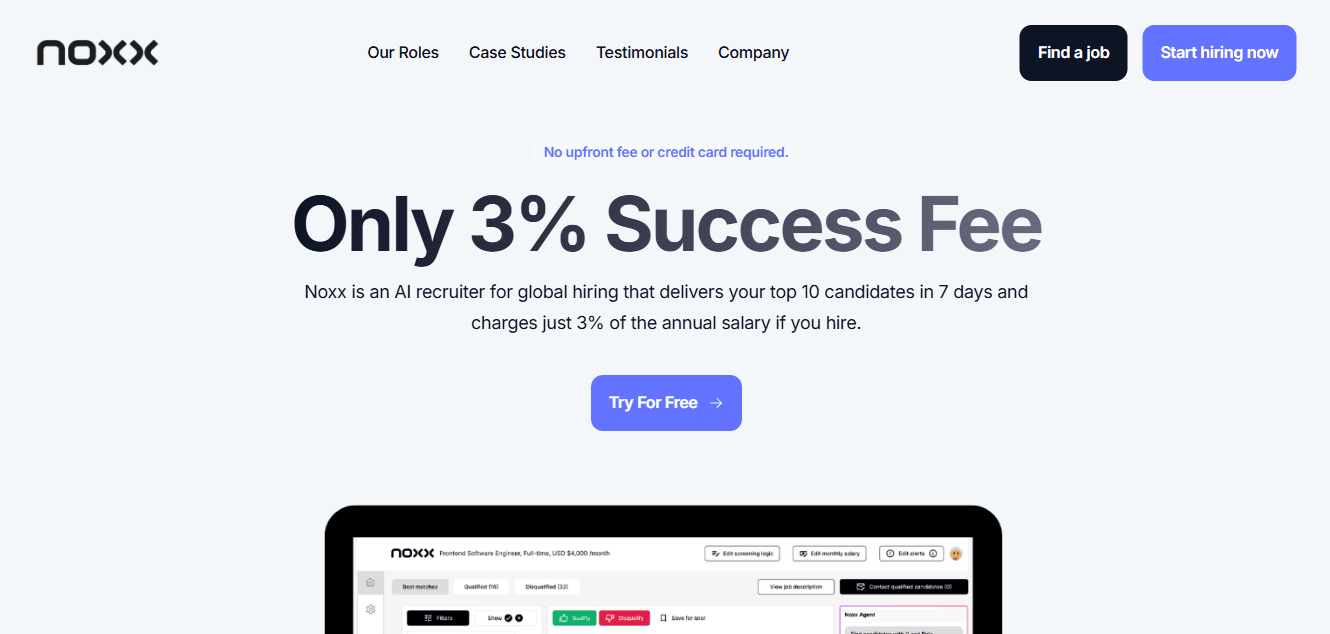
Core services: AI-driven candidate sourcing and contingency-based hiring.
Notable industries: technology companies hiring for engineering, marketing, and sales roles. Technology specializations: applicant screening automation, candidate matching algorithms, salary benchmarking dashboards.
Distinguishing strengths: rapid shortlists (top 10 candidates in 7 days), no upfront fees, pay-on-hire model, and transparent salary expectations; useful when you need to compress hiring cycles and reduce recruiter overhead.
2. BairesDev
Core services: staff augmentation, custom software engineering, and end-to-end product development.
Notable industries: startups to Fortune 500s across fintech, SaaS, and enterprise systems.
Technology specializations: full-stack engineering, cloud migrations, large-scale legacy modernization.
Distinguishing strengths: founded in 2009 by engineers, multi-country offices (Argentina, Brazil, Colombia, Mexico, US), a company-wide English fluency requirement, and multi-timezone staffing to support long overlap with North American teams.
3. Infosys
Core services: digital services, consulting, and large transformation programs.
Notable industries: banking, insurance, manufacturing, and the public sector.
Technology specializations: AI-augmented delivery, enterprise cloud, large-scale ERP, and platform integrations.
Distinguishing strengths: 30+ years in operation, global delivery model across 50+ countries, emphasis on continuous reskilling and enterprise-grade governance.
4. Encora
Core services: product engineering, R&D partnerships, staff augmentation.
Notable industries: health tech, fintech, supply chain, and logistics.
Technology specializations: embedded systems, data engineering, and platform modernization.
Distinguishing strengths: 5,000+ employees, 20+ offices worldwide, focus on sustained product ownership for enterprise clients, and deep vertical domain expertise.
5. Gorilla Logic
Core services: nearshore engineering squads, agile product teams, QA, and UX.
Notable industries: SaaS, eCommerce, enterprise software.
Technology specializations: cloud-native apps, continuous delivery pipelines, front-end UX.
Distinguishing strengths: Denver HQ with nearshore squads in Mexico and Costa Rica, a formal R&D program to keep engineers current, high retention metrics, and steady semi-annual growth.
6. Sonatafy

Core services: nearshore staff augmentation and cross-functional product teams.
Notable industries: healthcare, financial services, SaaS, retail.
Technology specializations: backend systems, HIPAA-aware solutions, product engineering.
Distinguishing strengths: US company with Latin American offices, featured in business press, reported attrition under 7% and formal professional development oversight for engineers.
7. UnoSquare

Core services: distributed agile teams, digital transformation consulting.
Notable industries: financial institutions, biotech, and high-tech enterprises.
Technology specializations: cloud engineering, API-first architectures, data platforms.
Distinguishing strengths: founded in 2009, multi-country operations spanning six countries and seven time zones, reported 98 percent retention, and repeated INC. 5000 recognition for growth.
8. Teravision Technologies
Core services: nearshore development, bench-enabled rapid staffing, R&D collaboration with universities.
Notable industries: finance, wearables, healthcare, and entertainment.
Technology specializations: mobile, IoT integration, backend services.
Distinguishing strengths: strong university partnerships for talent pipelines, bench model for fast ramping, and cost-effective nearshore pricing.
9. eTeam
Core services: product design through delivery, data science and ML engineering, full lifecycle development.
Notable industries: consumer platforms, enterprise tools, analytics-driven products.
Technology specializations: machine learning pipelines, data engineering, cross-platform apps.
Distinguishing strengths: multi-office presence across Mexico, Ukraine, Poland, and the US, and a founder- and engineer-led culture that quickly turns napkin sketches into production products.
10. Virtual Mind
Core services: custom software and mobile app development, UX/UI design, staff augmentation.
Notable industries: US-based clients across social platforms, productivity, and enterprise utilities.
Technology specializations: native mobile (iOS, Android), web platforms, UX-driven product builds.
Distinguishing strengths: focus on augmenting in-house teams with individual professionals, business model structured around US client work, and long-term augmentation relationships.
11. ACID Labs
Core services: agile product teams, consulting, staffing, and innovation projects.
Notable industries: cross-industry clients seeking experimental product work.
Technology specializations: modern web stacks, rapid prototyping, cloud-native services.
Distinguishing strengths: Chilean roots with pan-American offices, a high semi-annual growth rate reported at 15.9 percent, and emphasis on growing junior talent inside client-engaged teams.
12. Hatch Works
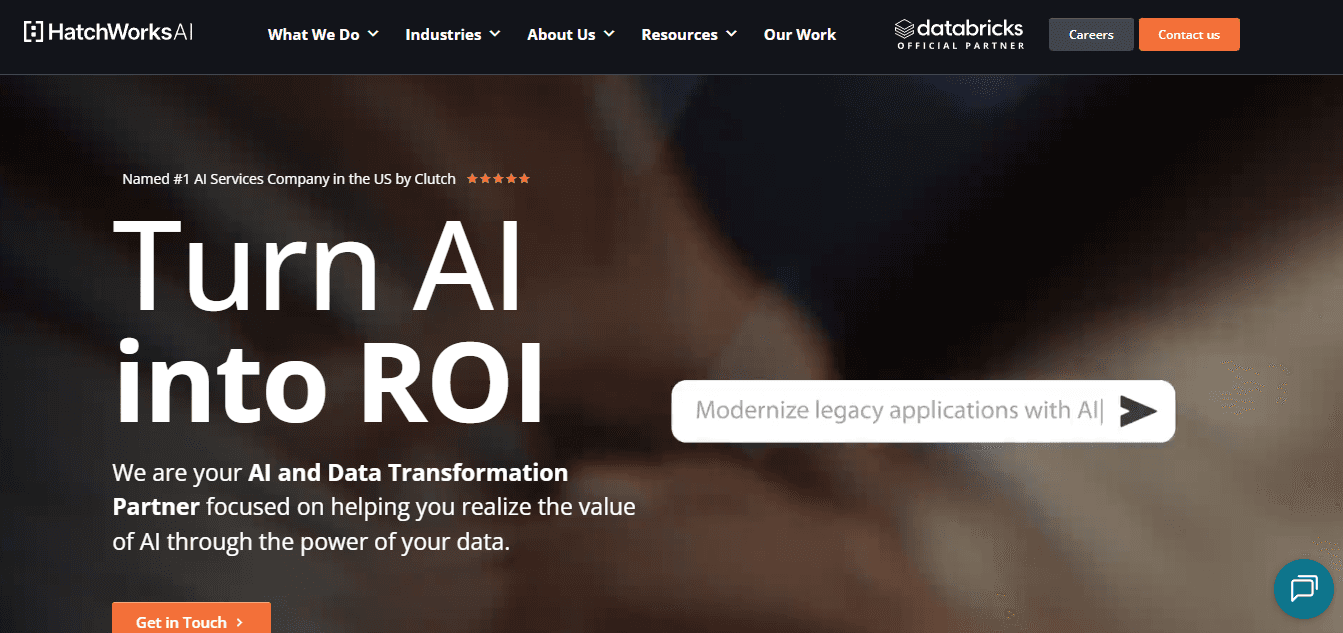
Core services: full-lifecycle product delivery from strategy to engineering, iterative product design.
Notable industries: healthcare and financial services.
Technology specializations: regulated systems, data analysis, and modernization of legacy stacks.
Distinguishing strengths: small, senior team with average practitioner experience around 10 years, hands-on iterative methodology, and focus on tying product strategy to execution.
13. CoasinLogicalis
Core services: cloud infrastructure, digital workplace solutions, managed lifecycle services.
Notable industries: large enterprises across telecommunications, utilities, and government.
Technology specializations: hybrid IT, cloud architecture, advisory-led transformations.
Distinguishing strengths: more than 1,100 local employees, Logicalis Group heritage dating to 1997, global client base of over 10,000, and presence across 20+ countries.
14. Codebay
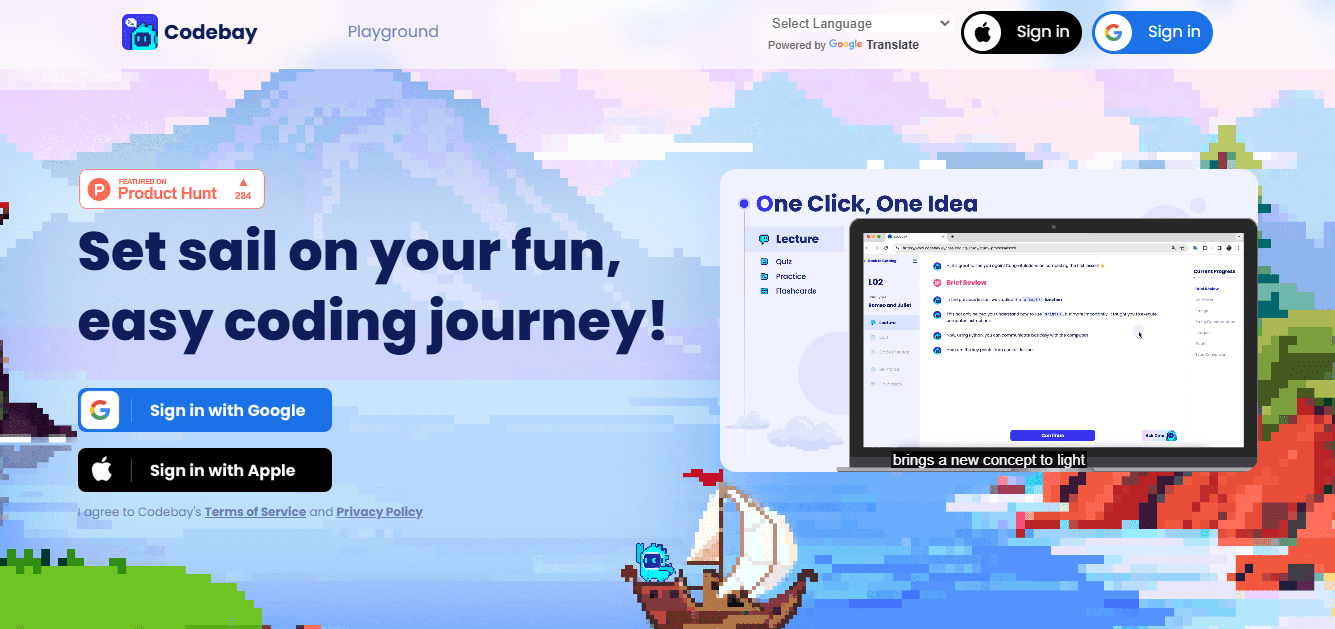
Core services: nearshore teams dedicated to client projects, agile delivery.
Notable industries: SME product teams, B2B software.
Technology specializations: customized team composition, iterative development, client-aligned delivery processes.
Distinguishing strengths: founded in 2020 with Mexico offices, policy of not using freelancers, so assigned programmers remain focused on single client engagements.
15. Ancient
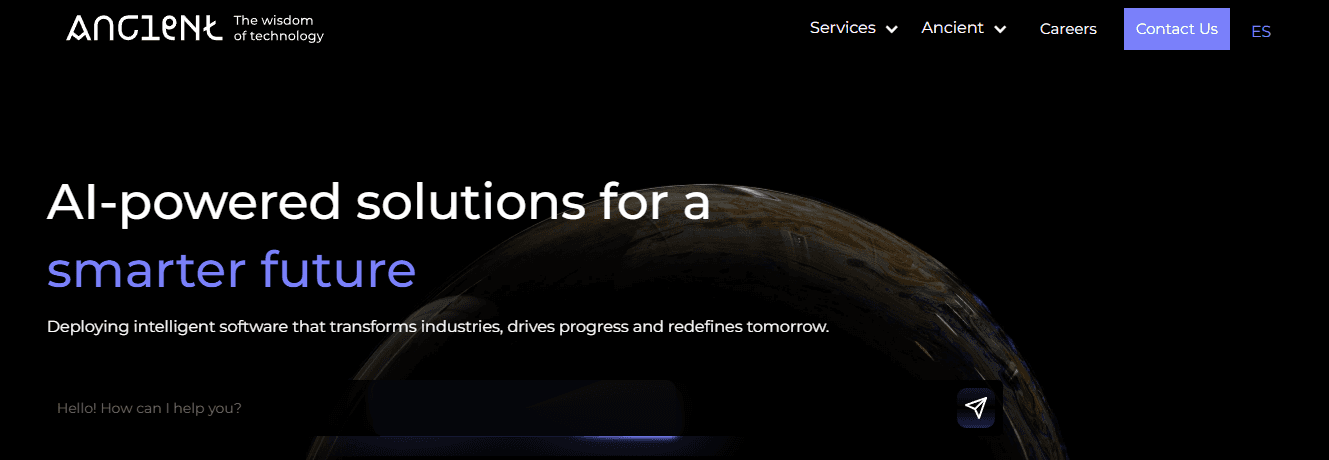
Core services: digital transformation, e-commerce enablement, custom software products.
Notable industries: logistics, public entities, and commerce platforms.
Technology specializations: ERP development, logistics platforms, e-commerce pipelines.
Distinguishing strengths: Mexican origin with proprietary products (Trucker and Quark ERP), blends product thinking with client projects to deliver operational tooling alongside bespoke work.
16. DaCoders

Core services: team-based software delivery, project execution across niches.
Notable industries: 15 niche sectors from startups to mid-market firms.
Technology specializations: full-stack development, cross-industry product builds, scalable team models.
Distinguishing strengths: eight years in operation, 300+ projects, over 220 collaborators worldwide, recognized by Great Place To Work, and holding regional badges for coding excellence.
Status Quo Disruption
Most nearshore hiring teams manage candidate flow with spreadsheets and fragmented approvals because it is familiar and low-cost to start. As stakeholder counts and speed expectations rise, those spreadsheets fracture into slow decisions, lost offers, and mounting recruiter time spent reconciling feedback during critical two-week hiring windows. Platforms like AI recruiter centralize sourcing, automate screening, and surface salary alignment, compressing review cycles and preserving hiring velocity while you protect candidate experience and IP.
Practical Selection Signals You Should Watch
Which metrics actually predict a reliable partner in month three, not just month one? Look for five concrete signals: documented retention rates by role, published case studies with measurable outcomes, public security certifications or SOC/ISO attestations, named client references in your industry, and demonstrated overlap hours with your core product team. We prefer partners that score consistently across these signals, rather than those that excel in only one area, such as pricing or a single technology.
How You Can Use This List Right Now
Treat each entry here as a hypothesis to validate, not a recommendation to sign immediately. Ask for role-level retention numbers, request a short architecture review from their prospective team, and run a paid spike or audit with clear acceptance criteria. Those steps determine whether a firm can move from pilot to a steady cadence without hidden handoffs that stall product momentum. That tidy vendor list starts to look different when you try to scale it fast, with real SLAs and deadlines.
How to Partner With a Reliable Software Development Outsourcing Company in Mexico

Picking the right partner and bringing them up to speed is a process, not a checklist. Start with rigorous vetting to demonstrate technical fit and communication readiness, then define measurable acceptance criteria, establish legal protections, and implement a phased ramp that reduces surprises and builds shared ownership.
How Should I Research and Vet Potential Partners?
Request three recent code reviews, an architecture diagram of a delivered feature, and a short video walkthrough of their CI/CD pipeline, then validate those artifacts with targeted questions.
Call two client references and ask about scope creep, defect density in the first three months, and whether the vendor met sprint acceptance criteria without repeated rework.
Confirm overlap hours and run a 48-hour communication trial, during which the vendor must meet response SLAs and demonstrate a time-zone-friendly cadence.
Verify formal security attestations and demand proof of recent penetration testing or SOC/ISO attestations before granting write access.
What Red Flags Show Up During Vetting?
This pattern appears across startups and mid-market teams: when founders lack technical oversight, superficial deliverables slip past acceptance and only reveal themselves at scale, leading to costly rewrites. To avoid that, require a short, paid architecture spike or audit in the first two weeks, with a written list of technical risks and mitigation tasks the vendor must accept before full scope begins.
How Do You Set Expectations and Define Scope So Work is Predictable?
Write outcomes, not tasks, into your SOW. For each milestone, include specific acceptance tests, performance targets, and an explicit rollback plan for failed releases.
Require the vendor to submit a release checklist and an automated test coverage report for every sprint.
Use a short, timeboxed discovery to produce a prioritized backlog and acceptance criteria, then freeze the definition of done for that sprint so scope changes require a documented change request and an impact estimate.
What Communication Protocols Prevent Misalignment?
Choose a single source of truth, ideally a project workspace where backlog items, builds, and test results live, and make that workspace the default channel for decisions. Require a weekly architecture sync between your technical lead and the vendor tech lead, daily standups for the first two sprints, and a named escalation path for production incidents with stated SLA targets. Measure adherence, for example, by tracking average response time for blocking issues during the first 30 days, and treat the metric as a go/no-go signal for a deeper scope.
How Do You Confirm Intellectual Property Protection Beyond Typical Clauses?
Go beyond language in the contract and embed technical controls:
Mandate signed, reproducible builds with immutable tags in your repo.
Require automated SBOM generation for each release.
Use a third-party escrow account to store source and build artifacts, with explicit release triggers.
Insist on role-based access control for production credentials, with audit logs forwarded to your security team weekly, and make complete IP assignment conditional on passing the last acceptance gate and an escrow release.
How Do You Structure the Contract to Avoid Future Disputes?
Use short, clear clauses with measurable triggers:
Define acceptance as passing X automated tests and a user acceptance checklist signed within Y business days
Include limited liability and a warranty window tied to defect density thresholds
Add notice periods for scaling or resource changes, and spell out termination consequences for missed SLAs.
Insist on monthly invoicing with line items for effort, bench time, and third-party costs so nothing is opaque.
How Should Onboarding Be Phased to Reduce Risk and Build Trust?
Phase 1, week 0 to 2: access, pairing, and the paid spike that produces a risk register and a roadmap for the first quarter.
Phase 2, sprints 1 and 2: paired development with daily pairing sessions and at least one shared demo per sprint, so you validate process and quality quickly.
Phase 3, steady cadence: hand off ownership incrementally, commit to monthly architecture reviews, and set rotation rules so knowledge does not live in one person.
Think of onboarding like handing over the keys to a maintained car, not a pile of spare parts; the first rides must be supervised.
How Do You preserve Culture and Product-Mindedness When Teams Join?
Use a behavior-based pairing exercise in week one: have the vendor’s engineers solve a product problem with your PM observing, then run a retrospective. That exposes decision-making styles and reveals whether the vendor asks the right questions about user tradeoffs versus purely technical fixes. Pair the vendor tech lead with your product lead for weekly design reviews during the first 60 days to align on priorities and code-level trade-offs.
Email and Spreadsheets Stall Hires
Most teams manage selection and early onboarding with email, spreadsheets, and back-and-forth approvals, because that feels familiar and low cost. That familiar approach scales poorly as stakeholder numbers increase, leading to version conflicts in requirements, lost approvals, and stalled hires. Platforms like Noxx centralize candidate shortlists, automate routing and approvals, and produce audit trails, helping teams compress review cycles and preserve context as the project scales.
Market context matters for timing and negotiation; the IT services market in Mexico is expected to grow by 8.5% annually, indicating that vendor capacity and process maturity will continue improving, so benchmarking against evolving standards is essential. At the same time, roughly 80% of U.S. companies are considering nearshore software development in Mexico, which is driving faster vendor responses and creating more competitive shortlists during the selection process.
Vetting and Pairing Reduce Rework
When you combine strict vetting, a short paid spike, measurable acceptance gates, and a phased handover with pairing, you change the risk curve: surprises move left, rework falls, and product ownership becomes shared rather than outsourced.
Upload a Job and Get 10 Candidates Within 7 Days With Noxx (No Risk, No Upfront Fees)
We know drawn-out searches cost time and momentum, so if you want a low-friction way to validate talent fast, consider Noxx, the AI recruiter that screens 1,000+ applicants to deliver a top 10 shortlist in seven days and charges only $300 when you hire. Use it as a short, low-risk candidate experiment to tap nearshore Mexican engineering talent, preserve runway, keep bilingual, product-minded teams focused on shipping, and make hires based on fit and transparent salary expectations rather than guesswork.
Related Reading

Noxx is an AI recruiter for global hiring that delivers your top 10 candidates in 7 days and charges just 3% of the annual salary if you hire.