
20 Top Developer Assessment Tools To Hire Better Tech Talent
Developer assessment tools help companies evaluate coding skills, run role-based simulations, and use AI-driven analytics to hire top talent.
Hiring top tech talent is tough. Resumes look impressive, interviews go smoothly, and it’s tempting to believe any gaps will get filled once the developer is on the job. After all, smart people learn fast, right? But weeks pass, then months. Features take longer than expected. Simple tasks require constant clarification. Senior engineers start reviewing, fixing, and quietly redoing work just to keep projects moving. Deadlines slip, technical debt creeps in, and what felt like a manageable hire slowly becomes an expensive drag on the entire team. That’s where developer assessment tools come in. The right tools let you see beyond the CV, test real-world coding ability, and confirm candidates can actually perform before they ever touch your codebase.
To help you act on those steps, Noxx offers AI recruiter, a simple assistant that matches the right coding challenges and interview platforms to your roles, ranks candidates by real results, and reduces time to hire so you can assemble the team you need.
Summary
Hiring decisions often overlook practical ability: 75% of hiring managers admit they hired developers without fully assessing skills, and 60% of companies still rely primarily on traditional resumes.
Poorly developed hires have a measurable impact: 46% of new hires fail within the first 18 months, and the average cost of a bad hire is estimated at about 30% of the employee's first-year earnings.
Configured assessment workflows deliver measurable gains: research shows up to a 70% increase in hiring accuracy and roughly a 50% reduction in hiring time when tools are used correctly.
Design matters: role-specific, time-boxed labs run in reproducible, containerized environments and practices trialed by engineering teams of 50 to 200 people reduced onboarding rework by aligning assessments with day-to-day tasks.
The market offers purpose-built options, with 20 leading developer assessment platforms that combine automated coding tests, live simulations, AI evaluation, and soft-skill checks, enabling teams to match tools to specific hiring needs.
AI recruiter addresses this by matching roles to appropriate coding challenges, ranking candidates by objective results, and shortening the time to hire.
Are You Hiring Developers Without Knowing Their True Skills?

Developer hiring routinely fails where it matters most:
Practical skill
Reliable collaboration
Predictable impact on the codebase
You can read a resume in ten minutes, but you cannot see how someone debugs a broken deployment, writes maintainable tests, or explains tradeoffs to a product manager.
Why Do Resumes and Interviews Miss Practical Ability?
Resumes privilege presentation over performance, and live interviews reward theatrical answers. When hiring managers rely on CVs and short conversations, they miss how a candidate actually writes production-ready code, simplifies API contracts, or triages incidents under pressure. The result is slower sprints, brittle deployments, and managers spending weeks fixing what should have been checked at the gate.
How Can Assessments Prove Real Coding Ability?
Design role-specific, time-boxed exercises that mirror the job:
A microservice to extend
A flaky integration to stabilize
A small system design with real constraints
Use containerized labs and reproducible environments so every candidate faces the same inputs and telemetry, then collect objective signals, runtime performance, test coverage, memory footprints, and the candidate’s commit history. Those signals reveal craftsmanship, whether a developer writes for readability, anticipates failure modes, and documents intent. In trials with engineering teams of 50 to 200 people, these practical exercises reduced onboarding rework by aligning with day-to-day challenges.
How Should Teams Evaluate Communication and Culture Fit?
Create assessment scenarios that require written design notes, code review responses, and recorded walkthroughs. Ask candidates to explain a trade-off in plain language, then propose an alternative approach when constraints change.
Score those outputs against a rubric that values clarity, humility in code comments, and a pattern of iterative improvement. This surfaces emotional intelligence and collaboration skills without relying on gut feelings during a 30-minute interview.
What Steps Actually Reduce Hiring Bias?
Standardize the rubric, anonymize submissions, and benchmark candidates against a role-specific competency matrix before any resume or background data are revealed. Those procedural changes shift decisions from impressions to outcomes.
The effect is practical, like when teams adopt blind scoring and shared rubrics, hiring decisions center on consistent, repeatable measurements rather than pedigree or personal chemistry.
A Stubborn Industry Habit, and Why It Breaks Down
Most teams screen candidates with resumes and ad hoc interviews because that approach is familiar and requires no new systems. That habit scales poorly, though; as headcount grows, subjective filters create inconsistent expectations and unpredictable hiring velocity.
Teams find that platforms like Noxx provide standardized, role-aligned labs, anonymized scoring, and ATS integration, which compress review cycles, reduce manual interpretation, and produce comparable candidate benchmarks across hiring rounds.
Hard Evidence That Something Is Off
The 2025 Developer Skills Report found that 75% of hiring managers admit to hiring developers without fully assessing their skills, meaning many organizations make placement decisions without reliable evidence that these candidates will perform on the job.
The same 2025 Developer Skills Report found 60% of companies rely on traditional resumes rather than skill assessments, showing that resume-first hiring remains the default even when better methods exist.
A Concrete Checklist to Make Assessments Work
Build job-specific labs that mirror production constraints, not abstract puzzles.
Automate objective metrics, then combine them with human review for nuanced judgment.
Include asynchronous collaboration tasks to measure written communication and pull request hygiene.
Use anonymized scoring and clear pass/fail thresholds to prevent bias in early-stage filtering.
Integrate results into your ATS so hiring decisions are traceable and comparable over time.
Think of assessments like safety inspections for aircraft: a paper certificate is reassuring, but a checklist plus an engine run tells you whether the plane will fly today.
Related Reading
The High Cost of Ineffective Tech Hiring

Bad developer hires drain time, money, and momentum in concrete, measurable ways. They reopen searches, delay releases, and force leaders into firefight mode instead of product mode.
How Do Hiring Mistakes Actually Translate Into Late Launches and Budget Overruns?
When a new engineer underperforms, the immediate hit is lost developer hours, but the higher cost shows up as slower feature throughput and increased technical debt. Substitute a struggling hire with a contractor to ship a delayed feature, and you typically pay a 1.5x to 2x premium for the same output while the team spends cycles on hand-holding. That premium plus re-recruiting and onboarding time turns a single personnel mistake into a multi-month drag on roadmap metrics and predictable revenue targets.
The data explains why this happens so often. More than 70% of tech recruiters report receiving unqualified applicants for every open role, yet many hiring decisions still rely heavily on resume screening and unstructured interviews, methods proven to fail at predicting real-world coding ability and often introduce unconscious bias. The result? Mis-hires that don’t show their true impact until weeks or months later.
The True Cost of a Bad Hire
According to the U.S. Department of Labor, a bad hire costs roughly 30% of a first-year salary. For a $100,000 developer, that’s $30,000 lost, before factoring in project delays, rework, or missed revenue.
The Society for Human Resource Management (SHRM) paints an even harsher picture. Replacing technical and supervisory roles can cost 75% to 150% of the target candidate's salary, and in some cases, much more. These numbers reflect not just recruiting expenses, but the hidden toll of lost productivity, strained teams, and stalled momentum.
The Ripple Effects of IT Turnover
And turnover doesn’t happen in isolation. When an IT hire underperforms or leaves, the ripple effects are immediate. Roles remain open for 41–44 days on average; projects slow; onboarding investments vanish; and senior engineers spend valuable time fixing problems instead of building new features.
Research shows that underperformers can be 18% less productive, while managers may spend up to 17% of their time managing performance issues rather than driving strategy. Morale drops, collaboration suffers, and high performers may start looking elsewhere.
Why the Right Assessment Tools Matter
In technology roles, the stakes rise even higher. Poor code quality creates cascading bugs. Missed details can introduce security vulnerabilities. With the average cost of a data breach exceeding $4 million, according to IBM, the wrong hire can expose a business to risks far beyond salary or hiring costs.
This is why relying on “learning on the job” is no longer a safe bet. There is a smarter, more reliable way to evaluate developer talent before the damage is done, and it starts with the right assessment tools.
What Does a Concrete Cost Model Look Like for Your Next Hire?
Teams lose trust fast. Managers become micromanagers, experienced contributors get pulled into code rescue work, and morale erodes as review queues lengthen and releases become riskier. The emotional fallout shows up as slower code review turnarounds, higher defect rates in production, and rising attrition among the people who have to clean up mistakes; each of those creates operational cost that compounds the original hiring waste.
What Should Leaders Measure to Spot a Mis-Hire in the First 30 to 90 Days?
Run three quick line items before you hire:
Hard recruiting costs
Onboarding productivity loss is measured in velocity points
Chance of churn within 18 months
Translate velocity into dollars by estimating the revenue or opportunity associated with a sprint, then multiply by the projected number of slip weeks. Use short, measurable gates during early weeks to convert guesswork into signals, such as PR throughput, defect density, and peer review feedback, and treat those signals as risk multipliers in your budget forecasts.
What Should Leaders Measure to Spot a Mis-Hire in the First 30 to 90 Days?
Track five leading indicators:
Ramp time to first meaningful commit,
Percentage of passing tests authored by the hire
Time-to-review for their PRs,
Number of rollback events tied to their code
Qualitative signals from cross-functional partners
Set explicit thresholds and trigger a remediation path if several indicators fall below target; failure to act early magnifies both financial exposure and team stress.
Related Reading
20 Developer Assessment Tools for Fast, Verified Hiring
1. Noxx
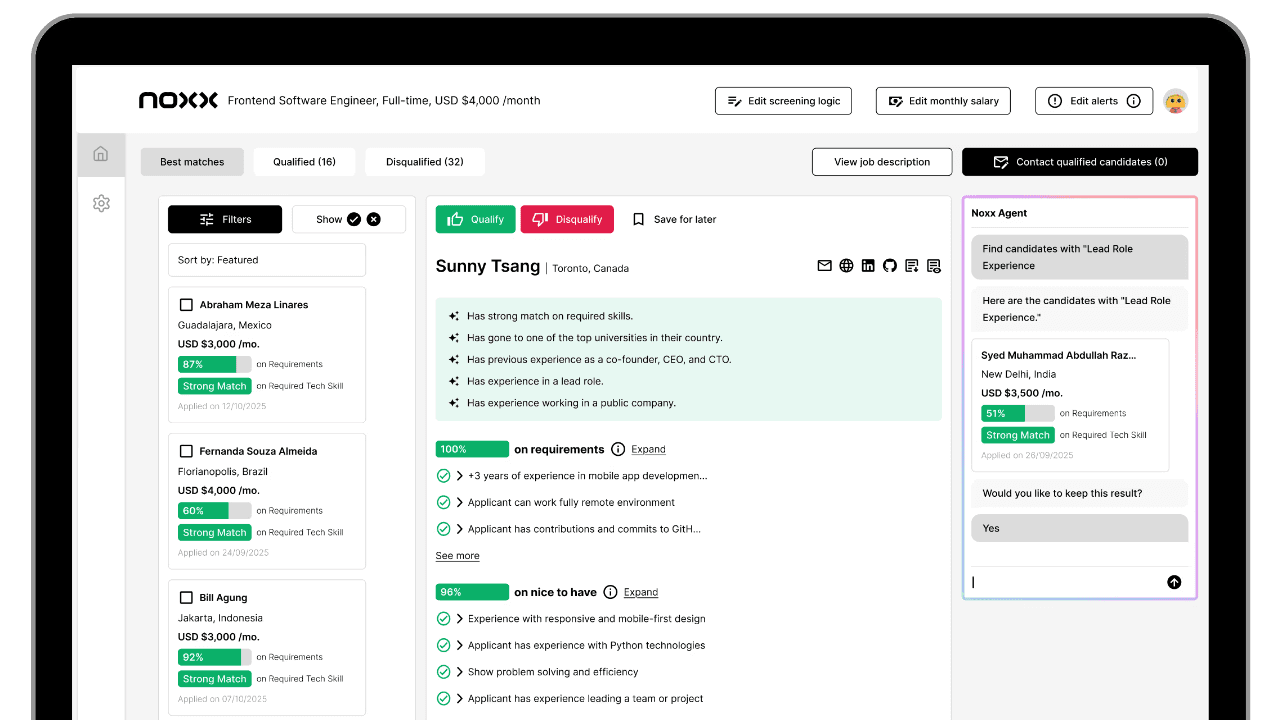
An AI recruiter and candidate-sourcing platform that automates large-scale screening and shortlist generation.
What it does: The AI screens thousands of applicants, surfaces the top 10 candidates in seven days, and displays salary expectations up front so you can act quickly.
Key features: Automated sourcing from 1,000+ applicants, no upfront fees, pay-only-if-you-hire pricing (3 percent of annual salary), role templates for engineers, marketers, and sales, and cost arbitrage claims vs US rates.
Best use case: Fast hires when hiring volume is high, and you need a validated shortlist quickly without committing recruiter hours.
2. HackerEarth
An all-in-one tech recruiting platform focused on skills-based assessment and candidate experience.
What it does: Lets teams build custom coding tests for 100+ roles, run project-based assessments, stage live coding events, and screen at scale against a global developer network.
Key features: 36,000-question library, adaptive AI Interview Agent trained on 36,000+ technical prompts, Screening Agent that filters early-stage applicants, SmartBrowser anti-cheat, support for 40+ languages, ATS integrations.
Best use case: Centralized, enterprise-grade hiring pipelines that need rich question banks, proctoring, and interview simulation at scale.
3. Codility
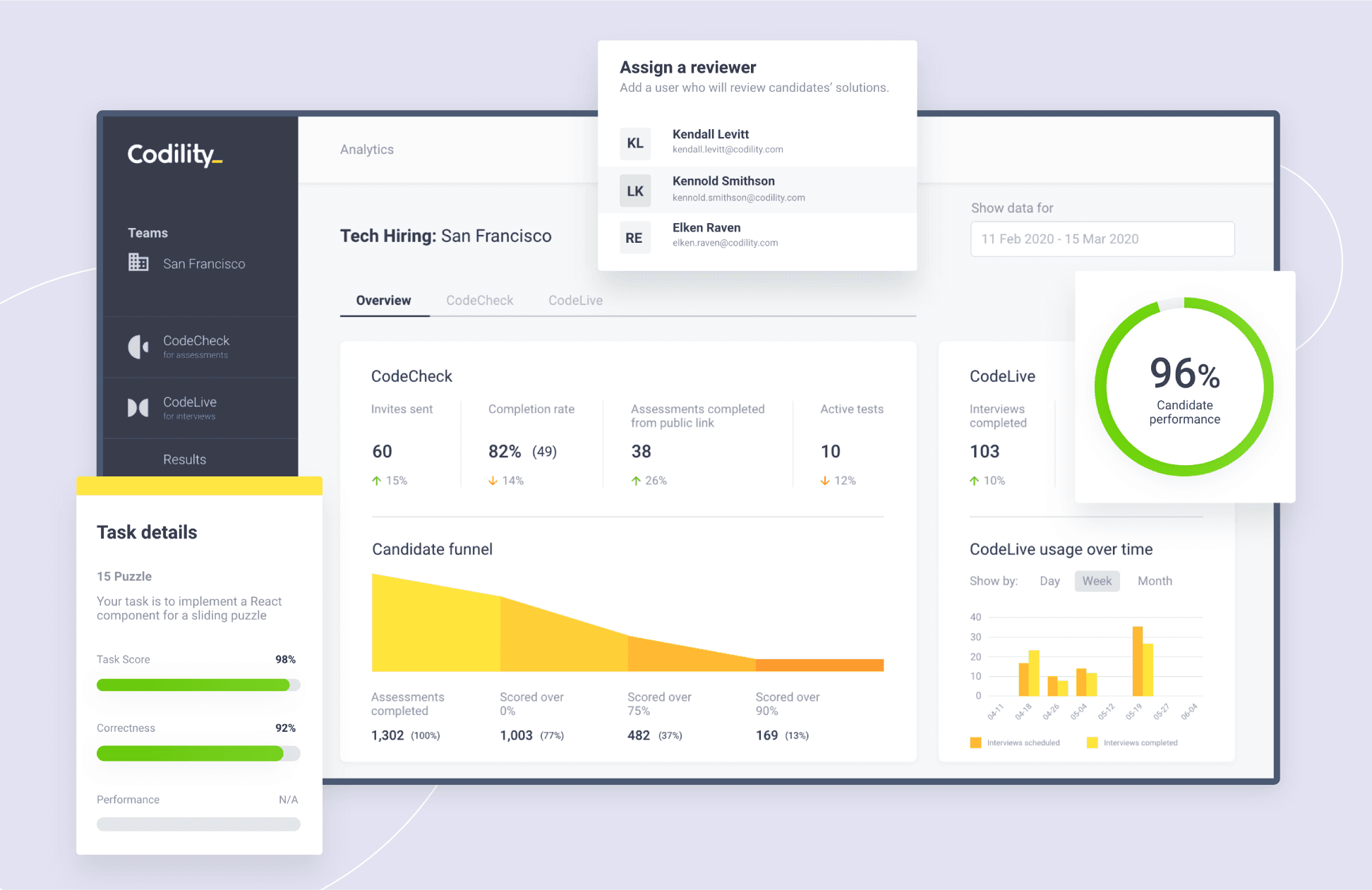
A timed coding challenge and interview platform for assessing algorithmic skill and coding efficiency.
What it does: Provides secure tests plus live interview tools so evaluators can observe problem-solving in real time.
Key features: CodeLive for interactive interviews, CodeCheck for automated evaluation, CodeEvent for gamified recruitment events.
Best use case: Roles where algorithmic thinking and on-the-spot coding are strong signals, or when you want live observation plus automated scoring.
4. LeetCode
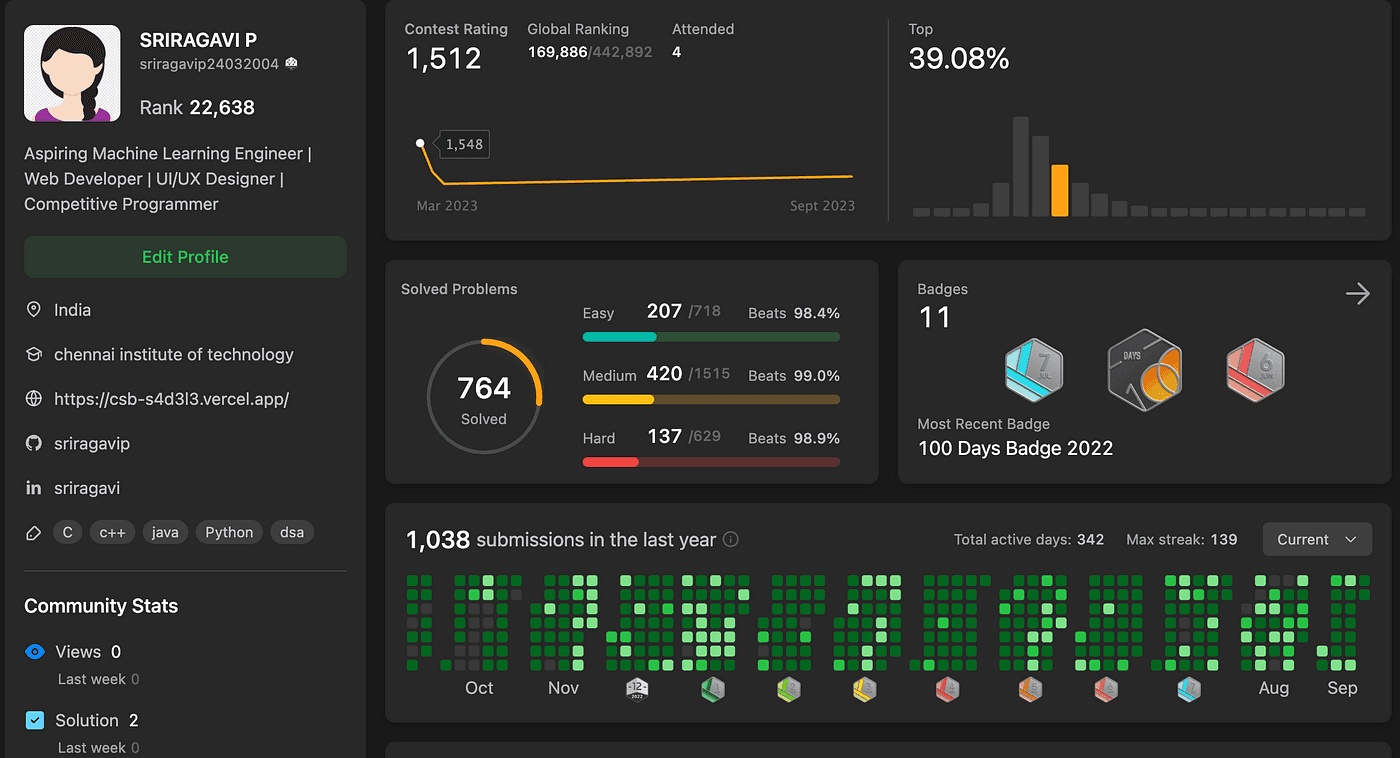
A developer platform built around practice problems and judged coding submissions used by hiring teams for timed interviews.
What it does: Delivers fast, reliable judge feedback and performance telemetry across large problem sets.
Key features: Live Editor with autocomplete, Judger II for performance analysis, and a large community of submissions for benchmarking.
Best use case: Technical screening focused on problem-solving under time pressure and norming candidate performance against a broad population.
5. HackerRank
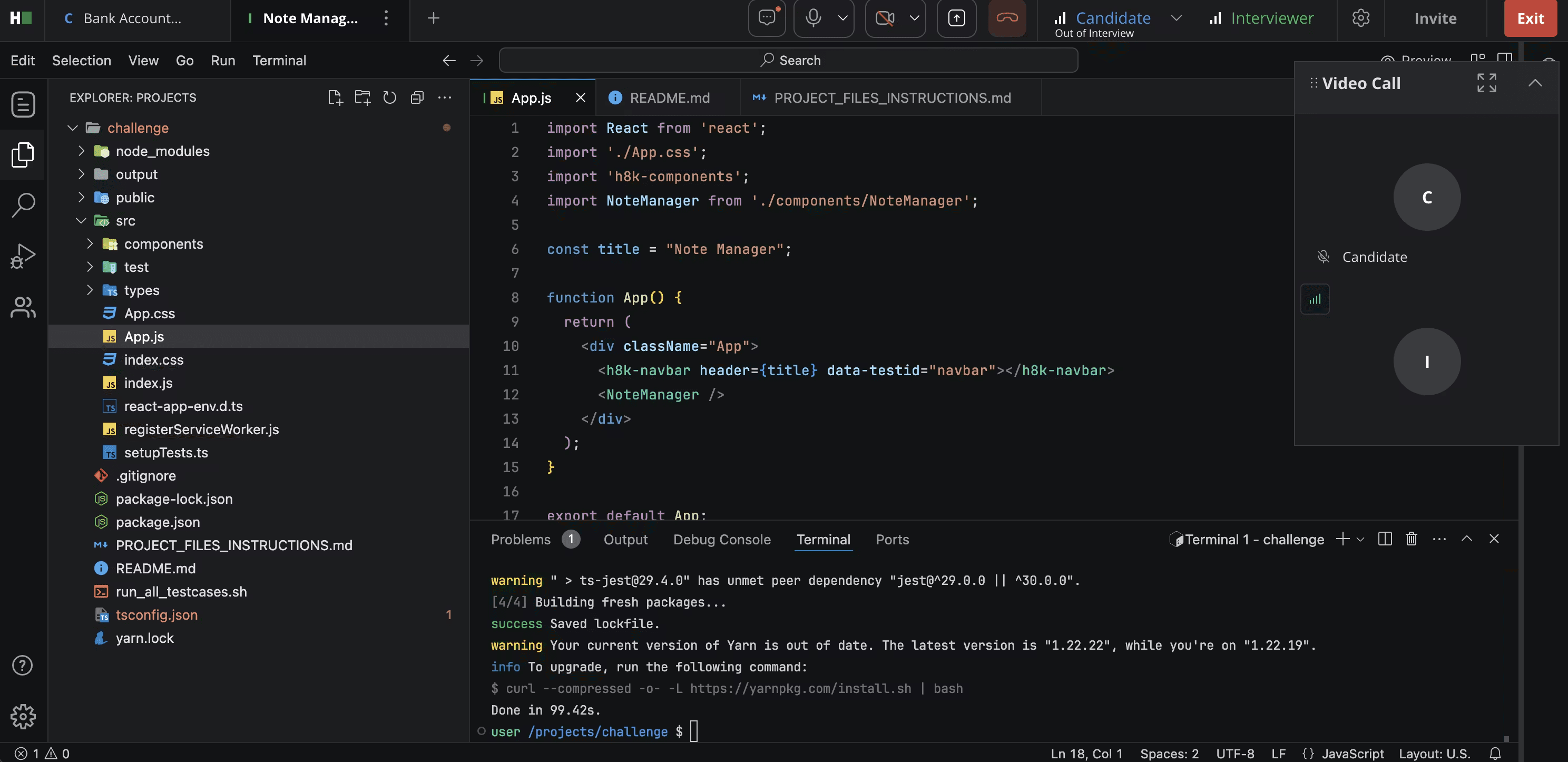
A modular assessment toolset for technical hiring that balances custom workflows with scalable test libraries.
What it does: Enables role-specific assessments, monitoring of test quality, and automated cheating detection to protect integrity.
Key features: Tailored certified content, built-in health reports, AI-driven cheating detection for tab switch and plagiarism, role workflows for scale.
Best use case: Organizations that need repeatable, auditable processes across many roles with anti-cheat and quality controls.
6. Woven
An AI-first recruiter that automates the earliest candidate interactions and triage.
What it does: Instantly screens candidates against must-have criteria, opens personalized contact via chat/video/voice, and advances qualified people into skills assessments.
Key features: AI Tech Recruiter screening, multi-channel candidate engagement, and real-time triggers for assessments.
Best use case: Teams that want to automate candidate qualification and keep applicants engaged without burdening engineers.
7. CoderPad
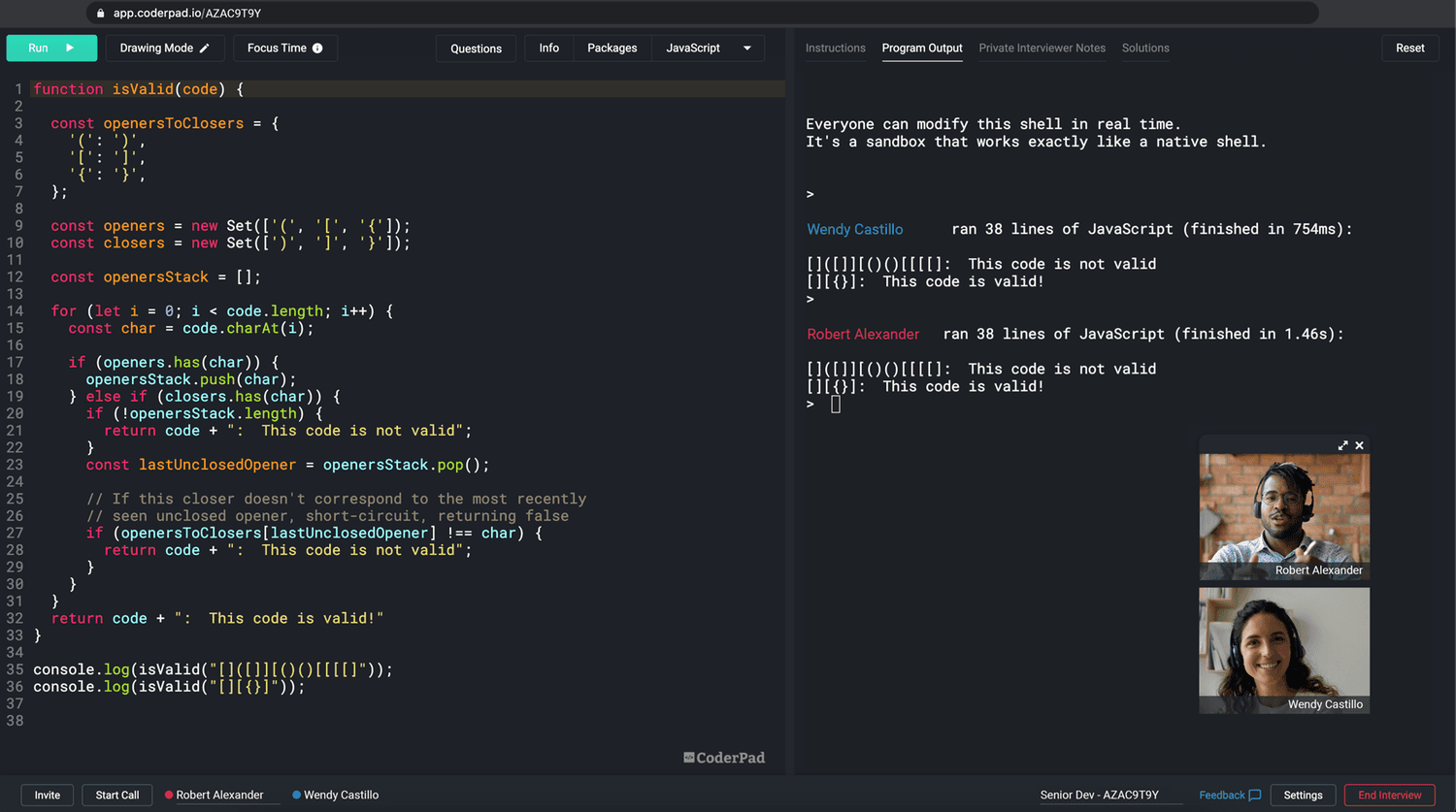
A collaborative, browser-based IDE for live interviews and take-home projects.
What it does: Let interviewers and candidates code, run, and debug together in a realistic environment.
Key features: Executable IDE, whiteboard/sketch tools, configurable project-based assessments.
Best use case: Interviews where seeing the candidate use familiar tools and iterate on working code is most important.
8. DevSkiller (SkillPanel)
A platform built on RealLifeTesting™ to evaluate candidates in job-like scenarios.
What it does: Simulates production tasks, ranks skills, and integrates with HR systems to create a skills-first pipeline.
Key features: RealLifeTesting; AI benchmarking for skill and behavioral fit; browser-based WebIDE with terminal and debugging.
Best use case: Hiring where on-the-job simulation and environment parity give the most predictive signal.
9. iMocha

A scalable skills assessment platform used by many large organizations.
What it does: Provides thousands of skills assessments, remote proctoring, job simulations, and AI reports to support data-led decisions.
Key features: 10,000+ skill items, 300+ predefined job roles, AI Screening Engine, conversational candidate engagement via voice/video/text.
Best use case: Enterprises that need a broad catalog spanning technical and business skills with advanced screening automation.
10. SHL
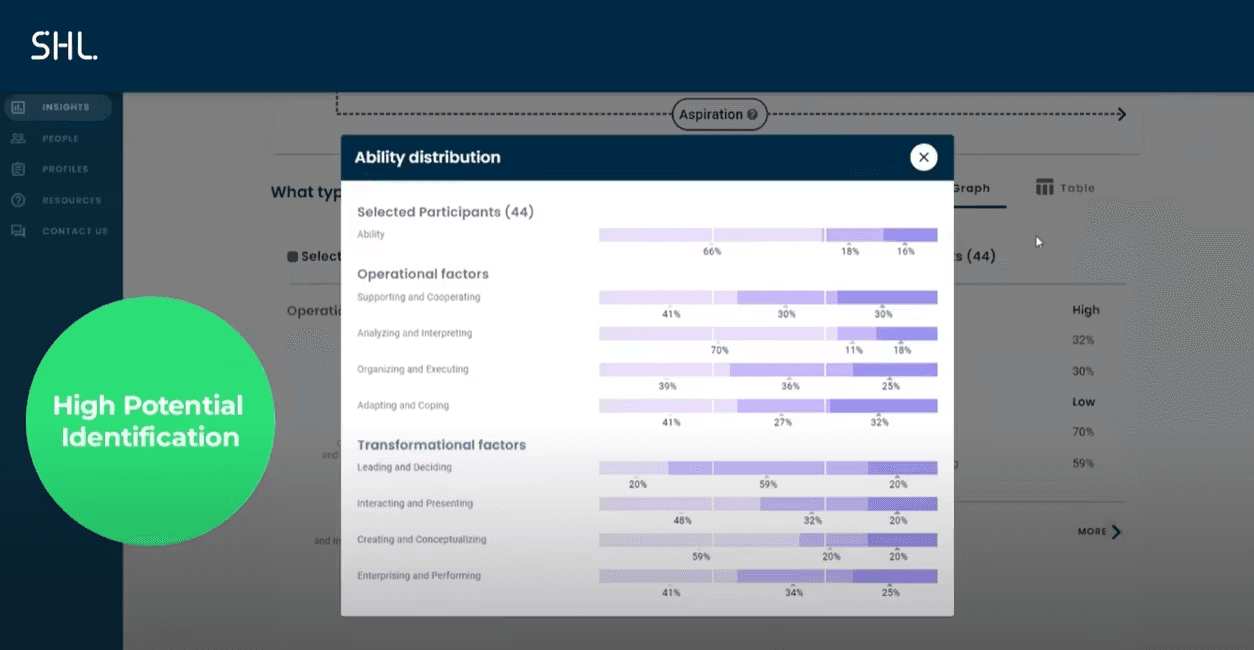
A talent-assessment platform that includes coding skills and simulations for many engineering roles.
What it does: Delivers realistic coding tasks in an IDE, automated logic scoring, and role-based benchmarks for fair comparison.
Key features: Multi-language coding assessments, logic scores, role-specific benchmarks, live interviewer handoffs.
Best use case: Organizations hiring across many technical specializations that require standardized logic scoring and benchmarking.
11. CodeSignal
A skills-assessment platform focused on validated, benchmarked coding evaluations.
What it does: Runs real-world tasks in a full IDE and produces benchmarked scores to compare candidates objectively.
Key features: Research-backed test design, patented scoring, role-specific certified assessments, and full IDE features.
Best use case: Companies that want a statistically validated score to compare candidates across roles and campuses.
12. CodinGame
A game-based assessment platform that evaluates coding through interactive puzzles and challenges.
What it does: Tests coding aptitude, problem-solving, and adaptability in a dynamic setting that reveals learning and creativity.
Key features: 60+ languages supported, real-time evaluation, competitive modes, data-driven insights.
Best use case: Early-stage screening for aptitude and culture fit when engagement and experience matter to the candidate brand.
13. TestGorilla
A broad talent-discovery platform built to remove subjectivity from screening.
What it does: Let teams combine technical exams with personality and soft-skill testing to create a rounded candidate profile.
Key features: Extensive skill libraries, customizable tests, ATS integrations, real-time scoring, and reporting.
Best use case: Hiring managers who want objective, multi-dimensional profiles early in the funnel.
14. TestDome
A practical assessment suite with technical and soft-skill tests.
What it does: Offers compact, job-focused tests and standard candidate flows, with basic anti-cheat and logging features.
Key features: Wide test library, situational judgment items, IP and candidate logging, simple interface.
Best use case: Small teams needing straightforward, quick assessments without heavy configuration.
15. Vervoe
An AI-graded evaluation platform that focuses on job simulations and automated ranking.
What it does: Runs realistic role simulations, uses AI to grade responses, and surfaces top performers.
Key features: 300 ready-to-use skill tests, AI scoring and rankings, realistic job simulations, API-based accreditation.
Best use case: Volume hiring where automated grading and simulated tasks reduce manual review.
16. Codeaid
A Git-centric assessment platform that mimics real developer workflows.
What it does: Simulates branch-based work, grades submissions with automated and manual options, and checks for plagiarism.
Key features: Automated grading engine, Git-based workflow simulation, plagiarism detection including LLM outputs, structured manual grading.
Best use case: Roles where Git fluency and real PR behavior are critical signals of on-the-job performance.
17. CodeSubmit
A take-home and live interview platform focused on real-world coding assignments.
What it does: Let candidates use their own tools while providing recruiters with consistent evaluation artifacts.
Key features: Take-home tasks, live coding sessions, initial triage tasks, ATS compatibility.
Best use case: Teams that prioritize candidate comfort and want to evaluate work done in a natural environment.
18. Qodo Merge
A code-review automation tool that also functions as an assessment lens for pull requests.
What it does: Scores PRs for quality, highlights problems, generates actionable suggestions, and can auto-merge based on policy.
Key features: PR quality scoring, ranked suggestions, automatic merge options, and comprehensive PR descriptions.
Best use case: Using real PRs as assessment artifacts to quickly evaluate contractor contributions during hiring or review.
19. Qualified
An interview and assessment platform with deep performance analytics.
What it does: Creates assignments that mimic real scenarios, runs automated evaluation, and benchmarks candidates.
Key features: Real-world assignment templates, immediate automated grading, benchmarking dashboards, ATS integrations.
Best use case: Teams seeking performance analytics to feed into data-driven hiring decisions and benchmarking.
20. TestTrick
A customizable developer screening tool focused on role specificity.
What it does: Provides flexible test construction, supports 12+ languages, and measures a broad array of developer skills.
Key features: Role-specific tests, multi-language support, adjustable difficulty, and comprehensive skill coverage.
Best use case: Smaller teams that need tight control over test content and scoring sensitivity.
Related Reading
Find Verified Developers Fast, Get 10 Top Candidates in 7 Days
We know a single bad developer hire can derail roadmaps and morale, and even cost months and thousands of dollars. Noxx takes the guesswork out of hiring by screening over 1,000 applicants automatically and delivering the 10 best candidates in just 7 days. With Noxx, you can:
Access pre-screened developers verified through AI assessments
See salary expectations upfront and hire at competitive rates
Avoid upfront fees; you only pay 3% of the annual salary if you hire
Let AI handle screening so you can focus on choosing the right fit
Upload your developer job description today and start building your team faster, smarter, and risk-free.

Noxx is an AI recruiter for global hiring that delivers your top 10 candidates in 7 days and charges just 3% of the annual salary if you hire.