
21 Best Places To Hire Mobile App Developers for Your Project
Best place to hire mobile app developers using trusted platforms like Upwork and Toptal for vetted freelance talent, teams, and scalable app projects.
You have an app idea, a tight deadline, and a limited budget, yet finding vetted iOS or Android developers, a reliable freelance expert, or a dependable development team feels like searching blind. When hiring a developer, choosing the right location affects delivery speed, costs, and final product quality. This article outlines practical checks, hiring steps, and sourcing options to help you quickly and reliably find and hire skilled mobile app developers, ensuring their projects are built efficiently, on budget, and to the required quality standards.
Noxx's AI recruiter answers those questions by delivering pre-screened candidates from vetted talent pools, reducing screening time so you reach a shortlist faster and hire with greater confidence.
Summary
Hiring skilled mobile app developers is a pervasive challenge: 70% of companies report difficulty finding qualified candidates, which forces teams to sift through large applicant volumes and adds weeks to roadmaps.
Rising demand is compressing hiring windows: projections indicate 25% growth in developer demand by 2025, and that over 50% of companies will be actively hiring in 2025, meaning teams face shorter offer timelines and greater compensation pressure.
Production experience matters more than portfolio gloss. 90% of top-rated developers have over three years of experience; candidates without live production apps should be treated as junior or require an explicit ramp plan.
Launch quality drives retention: over 50% of apps are uninstalled within the first month, and only 32% of users give an app a second chance after a poor experience, underscoring the cost of shipping brittle releases.
Curated and managed channels can reduce sourcing friction; for example, some platforms deliver candidates within 72 hours and report a four-day average fill rate with a 97% engagement success rate.
Mitigate onboarding and delivery risk with measurable gates, such as a one-week paid technical spike, a Day 1 90-minute kickoff, and a 60- to 90-day post-launch support window, to ensure predictable handover and incident response.
Noxx's AI recruiter addresses this by delivering pre-screened candidates from vetted talent pools, reducing screening time so teams reach a shortlist faster and hire with greater confidence.
Table of Contents
Is Finding the Right Mobile App Developer Hard?
Key Green Flags to Look for in a Mobile App Developer
21 Best Places to Hire Mobile App Developers
9 Mistakes to Avoid When Hiring Mobile App Developers
Hire Top Mobile App Developers in 7 Days with Noxx
Is Finding the Right Mobile App Developer Hard?

Hiring the right mobile app developer is the difference between a product that ships on time and one that hemorrhages money, months, and user trust. Get the wrong person, and you face wasted budget, missed deadlines, and an app that feels brittle and unfinished; get the right person, and you accelerate time-to-market and preserve runway.
Why Do So Many Hires Fail Early?
Teams post a job, interview a handful of candidates, and select whoever offers the lowest rate or the shortest lead time. That works when needs are basic, but it breaks down as soon as you need product judgment, scale, or maintainable code. I’ve seen freelance hires deliver a working prototype, only to leave a codebase that required a full rewrite three months later, resulting in twice the original cost and months of delay.
What Makes the Market Especially Noisy Right Now?
The market is crowded with freelancers and agencies, each claiming native iOS, Android, and cross-platform expertise, and that abundance hides a bigger problem. According to Natively, 70% of companies find it challenging to hire skilled mobile app developers, which means most teams are sifting through thousands of resumes to find a handful worth interviewing, adding recruiting weeks and uncertainty to every roadmap. This scarcity amplifies hiring risk and inflates salaries for proven talent.
How Much Does Technical Evaluation Matter If You Are Non-Technical?
A lot. Non-technical founders often rely on surface-level signals, such as portfolio screenshots or a quick app demo, which do not reveal test coverage, architectural choices, or how the engineer handles edge cases. Those hidden decisions determine whether new features are fast to implement or require refactoring. If you cannot read code, you need a process that tests product experience, troubleshooting approach, and delivery patterns, not just language syntax or API familiarity.
Why Do Requirements and Scope Cause So Many Mismatches?
Projects start with vague goals, wishlists, and optimistic timelines, so candidates sell to the wish rather than quote what’s feasible. When features are undefined, estimates balloon, and the first sprint becomes an unpaid discovery period. Clear acceptance criteria, prioritized user stories, and a short technical spike to validate assumptions turn vague briefs into hireable work, and they save money by preventing scope creep before engineering begins.
What About Balancing Cost Versus Long-Term Quality?
The cheapest engineer may ship fast, but they often leave technical debt that compounds, turning small fixes into big rewrites later. The right tradeoff balances upfront cost with ramp speed, retention likelihood, and predictable delivery. Review past retention, sample profiles that demonstrate product lifecycle ownership, and references confirming the candidate shipped through post-launch issues.
How Does Demand Change the Decision You Make Right Now?
Demand is rising, which shortens the window to hire senior talent and increases competition for engineers who can actually ship. The demand for skilled mobile app developers is expected to grow by 25% by 2025, a trend that means teams who wait risk paying premiums or settling for less-experienced hires. This pushes teams to choose hiring strategies that reduce risk, such as vigorous vetting, transparent pricing, and managed staffing options, so product teams can preserve velocity without overloading internal managers.
What Role Do Communication and Culture Fit Play in Delivery?
Technical skill is necessary but not sufficient. Poor communication, unclear decision ownership, or misaligned work rhythms stall sprints faster than any bug. Think of it like adding a new player to an orchestra, who knows their instrument but cannot follow the conductor; the piece collapses. Prioritize collaborators who show product empathy, document decisions, and adopt your release cadence from day one, because those habits prevent the daily friction that eats weeks.
Related Reading
• Best Job Boards for Software Engineers
• Software Developer Contract Rates
• Recruitment Process for Software Developers
• Hire Test Software Engineers
• How to Recruit Software Engineers
• How to Hire a Devops Engineer
• Software Developer Characteristics
Key Green Flags to Look for in a Mobile App Developer

You want developers who combine deep technical competence with product judgment and steady communication, because these four qualities prevent the familiar downstream failures that derail roadmaps and erode user trust. Prioritize people whose language skills, cross-platform judgment, UX sense, and testing discipline are visible in their work, then verify soft skills that keep delivery predictable.
What Technical Skills Should I Require?
Native roles demand native languages. For iOS, expect expertise in Swift and a working knowledge of legacy Objective-C, along with experience managing memory and modern concurrency patterns in production apps. For Android, look for Kotlin fluency and solid Java fundamentals, plus familiarity with the Android SDK and performance profiling. If you want cross-platform flexibility, hire engineers who can demonstrate competence across at least three language ecosystems used to build mobile UIs, such as Dart for Flutter, JavaScript/TypeScript for React Native, and C# for Xamarin.
Screening Tip
Ask candidates to walk you through a recent feature they owned, including the tradeoffs they made when choosing a language or library, and to point out one memory or performance bug they fixed and how long it took to resolve it.
How Should I Evaluate Cross-Platform Framework Experience?
Ask for code samples that include native module integration and platform-specific regressions. A strong cross-platform candidate will explain when they used platform channels or native bridges, why they chose them, and what tests caught platform drift. Look for knowledge of at least two major frameworks, and a short pair-programming task where they add a native-capability plugin or fix a navigation edge case, so you can see architecture judgment in real time.
What Level of OS Experience Matters for Product Teams?
Hiring someone who can both ship and maintain means checking recent production timelines. Request a timeline of feature ownership over the past 12 to 24 months, with metrics like crash rate before and after their release, or average ticket closure time. That shows they understand release flow, not just prototypes. Candidates who report concrete operational numbers reduce onboarding surprises.
Why Does User Experience Skill Matter for an Engineer?
70% of successful mobile app developers prioritize user experience design. That finding means the best engineers treat UX as a deliverable, not a postscript; they instrument micro-interactions, measure latency budgets, and consider accessibility from the first sprint.
Practical Screens
Ask candidates to convert a designer’s static mock into a responsive interaction and explain how they validated latency and accessibility, or to show A B test results where a small UI change changed retention.
What Testing and QA Practices Should Be Non-Negotiable?
Demand examples of automated test suites and CI pipelines. They should explain unit test coverage targets, how they run functional tests against device farms, and their strategy for regression suites during release windows.
Screening Tip
Ask them to bring a pull request that includes a failing test they wrote, then fixed, and to explain the debugging steps and time to resolution. That reveals whether tests catch real issues or exist only to appease the process.
How Do I Judge Coding Craft and Architecture?
Good candidates keep code readable, modular, and documented. Request a brief architectural critique of one of their repositories, with a focus on separation of concerns and dependency management. Practical checks include:
A meaningful commit history
The use of design patterns where appropriate
Examples of refactorings that reduced technical debt and shortened feature delivery time
A quick practical test is to provide a legacy screen with duplicated logic and ask them to extract a reusable component within 45 minutes, while documenting the test strategy.
What Soft Skills Prevent Hiring Mistakes?
Hire people who can prioritize outcomes over tasks. You want developers who can decompose a feature into acceptance criteria, estimate in story points or time based on historical velocity, and own post-launch incidents until resolution. Ask for examples of times they shifted scope to protect a milestone, including the trade-offs and the actual delivery delta. That specificity proves they understand tradeoffs, not just timelines.
How Can I Test Communication and Stakeholder Fit?
Communication is clear PR descriptions, timely async updates, and curated release notes. During interviews, give a short, ambiguous requirement and ask the candidate to write the acceptance criteria and a release plan, including what they would escalate and when. Also request two references who worked with PMs or designers, and ask them about response time and how the candidate handled cross-team disagreements. These behaviors predict whether the hire will create velocity or friction.
What Quick Interview Questions Separate Good From Excellent Candidates?
Ask them to explain a recent production incident in 10 sentences, including root cause and the exact fix timeline. Good answers include measurable remediation steps.
Give them a tiny debugging exercise on a shared device and watch how they triage logs and hypotheses. Time to insight matters.
Request a portfolio walkthrough of at least five apps or features, with metrics tied to each release. Candidates who can match code to outcomes show product ownership.
How Do Portfolio and Experience Checks Reduce Hiring Risk?
Require a portfolio that includes live apps, not just concept screens, and ask for store links or analytics screenshots that demonstrate engagement or retention improvements. 90% of top-rated developers have over 3 years of experience. That evidence indicates top performers typically have multiple production cycles under their belt, so prioritize candidates who can demonstrate iterations, rollbacks, and post-launch ownership rather than a string of prototypes. Practical gate, if a candidate lacks production examples, treat them as junior and staff them accordingly.
A Quick Hiring Checklist You Can Use Now
Portfolio, include at least three live apps with release notes.
Code sample, including tests and CI config.
Short debugging exercise during the interview.
Reference questions that ask about ramp speed and retention.
A trial week with clear deliverables and acceptance criteria, monitored for communication and predictability.
Hiring a developer is like recruiting a navigator for a long voyage; you need someone who knows the map, can read the weather, and will stay through storms. If you hire for visible outcomes and verify operational history, you replace guesswork with predictable delivery.
21 Best Places to Hire Mobile App Developers

1. Noxx
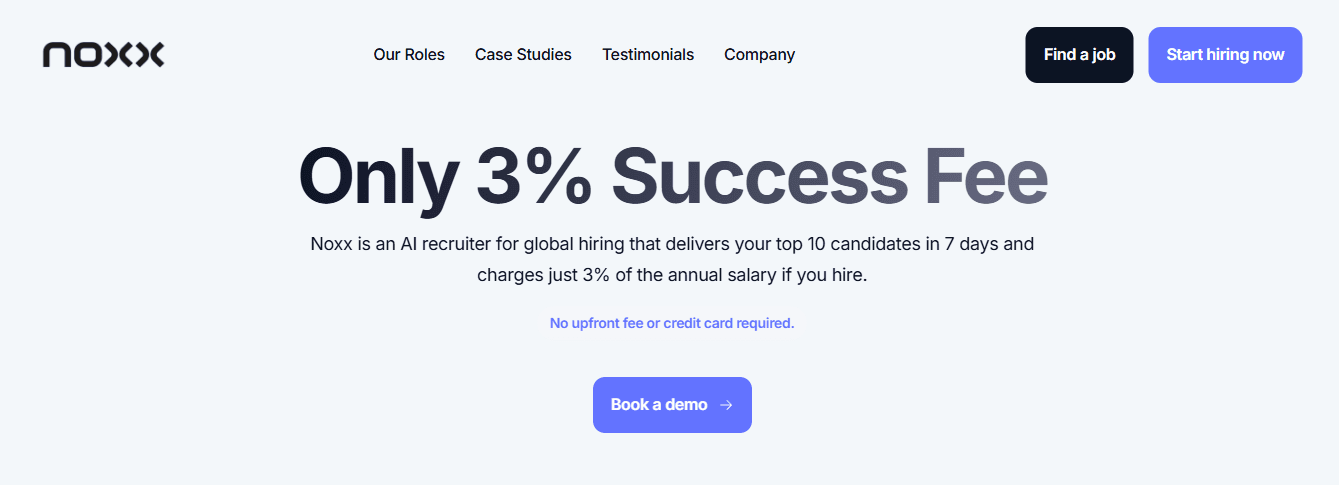
Noxx uses an AI recruiter to screen large applicant pools and surface the top 10 candidates within seven days. You upload a job description, and the system automatically filters applicants, showing salary expectations up front.
Pricing and trends: No upfront fees; you pay only 3% of the annual salary if you hire. The model emphasizes outcome-based pricing and a lower effective hourly cost than U.S. market rates.
Key benefits: Rapid shortlist, transparent compensation, and lower cost-per-hire.
Pros: Fast time-to-interview, predictable fee only on hire, and salary transparency.
Cons: Depends on the quality of the incoming applicant pool, may need follow-up technical validation for niche stacks.
Best for: Startups that need a fast shortlist and prefer a low-risk, pay-on-hire model.
How it addresses hiring pain: Centralizes sourcing and compensation clarity so teams avoid weekslong sourcing cycles and opaque salary negotiations.
2. Wow Remote Teams
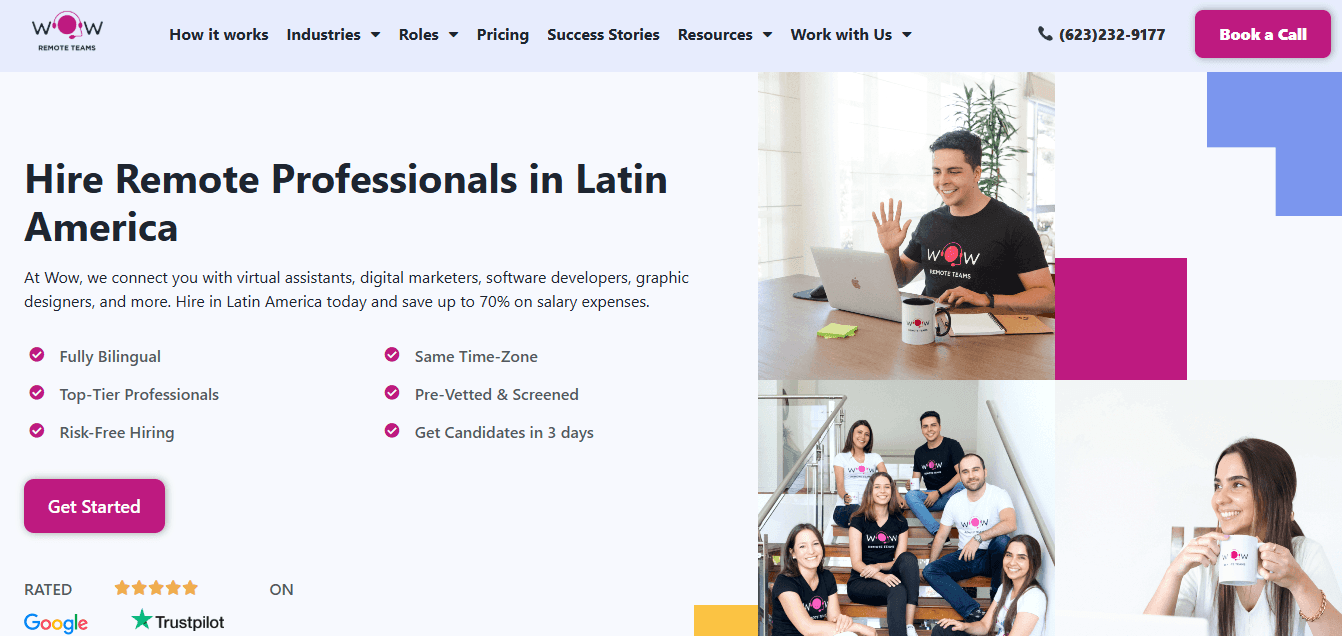
A nearshore staffing partner connecting U.S. teams with Latin American mobile developers; Wow handles recruitment, payroll, compliance, and retention support.
Pricing trends: Nearshore rates are 30 to 60 percent below U.S. onshore senior rates while preserving time zone overlap.
Key benefits: Cultural alignment, overlapping business hours, and end-to-end HR services.
Pros: Quick shortlists, simpler legal and payroll handling, better collaboration windows.
Cons: May be pricier than offshoring to Asia, limited bench for hyper-niche technologies.
Best for: Companies needing long-term hires that integrate into agile sprints and CI pipelines.
How it addresses hiring pain: Removes admin overhead for scaling teams, so engineering leads spend less time on compliance and more time on product.
3. Upwork
A large freelance marketplace where you post projects and review proposals from global developers.
Pricing trends: A broad range, from budget contractors to senior consulting rates; platform fees and escrow apply.
Key benefits: Huge talent pool and rapid access.
Pros: Flexible engagement, milestone billing, escrow protection.
Cons: Variable quality, time spent filtering applicants.
Best for: Prototypes, one-off features, or adding short-term capacity.
How it addresses hiring pain: Gives quick access to candidates for validation sprints, but you must invest in technical vetting to avoid rework.
4. Fiverr
Fixed-price “gigs” for narrowly scoped mobile tasks, from UI fixes to simple cross-platform builds.
Pricing trends: Predictable, low-cost options for discrete deliverables; higher fees for custom scopes.
Key benefits: Speed and transparent pricing.
Pros: Fast turnaround for small jobs, clear deliverables.
Cons: Limited depth for complex architecture, compliance gaps.
Best for: Prototypes, UX polish, or validation tasks.
How it addresses hiring pain: Reduces short-term budget risk when you only need a focused deliverable.
5. Toptal
A curated network claiming the top 3 percent of talent, with vetted developers matched to client needs.
Pricing trends: Premium hourly or project rates, often justified by reduced onboarding time.
Key benefits: High-caliber talent, faster ramp, strong client references.
Pros: Rigorous vetting, reliable performance, good for mission-critical work.
Cons: Higher cost and a smaller candidate pool relative to mass-marketplaces.
Best for: Enterprise-grade apps and teams that cannot afford early technical debt.
How it addresses hiring pain: Reduces hiring risk by delivering pre-vetted engineers who typically require less oversight.
6. Clutch.co
A review-driven directory of agencies, with client reviews, case studies, and cost ranges.
Pricing trends: Agency engagements vary by region and scope; expect packaged teams for end-to-end delivery.
Key benefits: Comparative agency intelligence and social proof.
Pros: Discover specialized firms and see verified client feedback.
Cons: Clutch does not manage delivery; you still negotiate contracts.
Best for: Choosing an agency when you need full team delivery and domain-specific case studies.
How it addresses hiring pain: Shortlists agencies with proven delivery histories, enabling you to prioritize vendors with relevant product experience.
7. DesignRush
A B2B directory focused on agencies that pair design with development, categorized by industry and technology.
Pricing trends: Agency rates follow a design-first premium pricing model.
Key benefits: Easy filtering by vertical and tech.
Pros: Strong for UX-led mobile projects.
Cons: Less depth for purely backend-heavy mobile systems.
Best for: Consumer apps where experience differentiates retention.
How it addresses hiring pain: surfaces agencies that combine UX and engineering to reduce friction in later handoffs.
8. Appinventiv
A full-service mobile product company offering ideation through post-launch support, with in-house teams across Flutter, React Native, Kotlin, and Swift.
Pricing trends: Enterprise-level pricing for end-to-end projects.
Key benefits: Domain expertise in fintech, healthcare, and e-commerce.
Pros: Scale, process maturity, and long-term support.
Cons: Longer procurement cycles and higher budget needs.
Best for: Teams seeking a single vendor to own product delivery.
How it addresses hiring pain: Provides continuity across product phases, preserving ownership and ramp time beyond the initial launch.
9. Twine
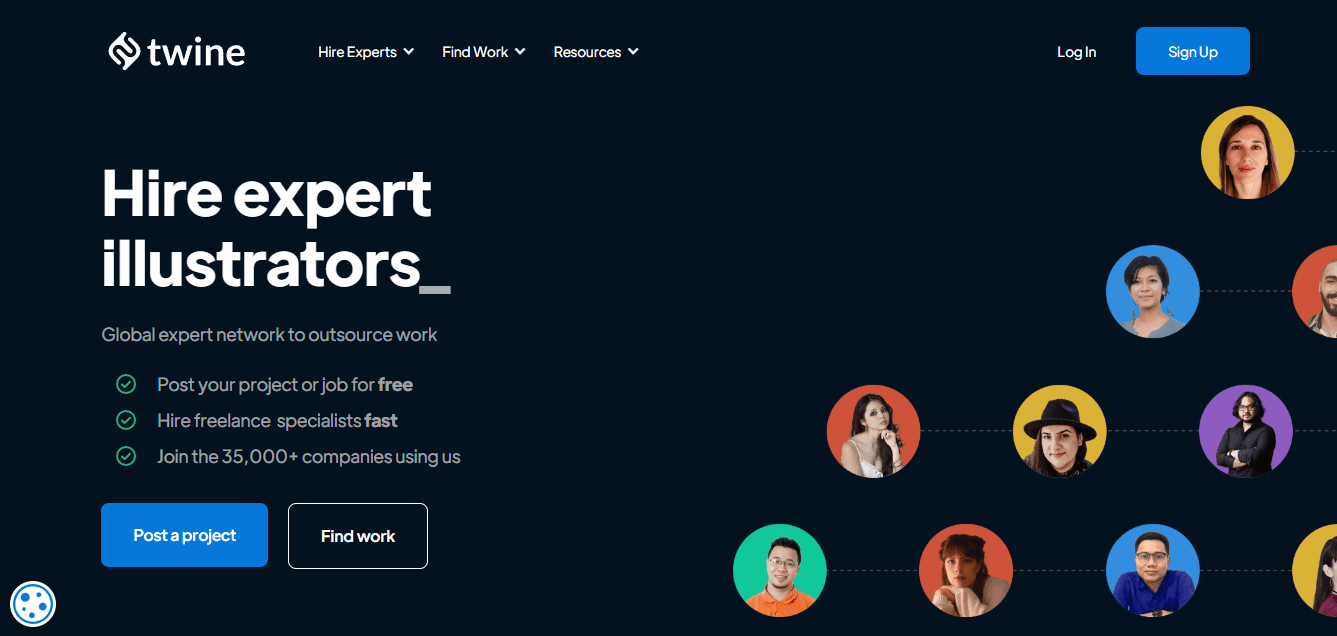
A curated freelancer marketplace emphasizing quality and verification; clients post projects and receive curated introductions.
Pricing trends: Mid-to-high range for experienced freelancers; clear portfolio ties to rates.
Key benefits: Curated matches and industry focus.
Pros: Lower noise than mass-marketplaces; better portfolio relevance.
Cons: Smaller pool than the largest platforms.
Best for: Selective freelance hires where portfolio depth matters.
How it addresses hiring pain: Reduces time spent sifting through irrelevant applicants by elevating pre-vetted matches.
10. Guru
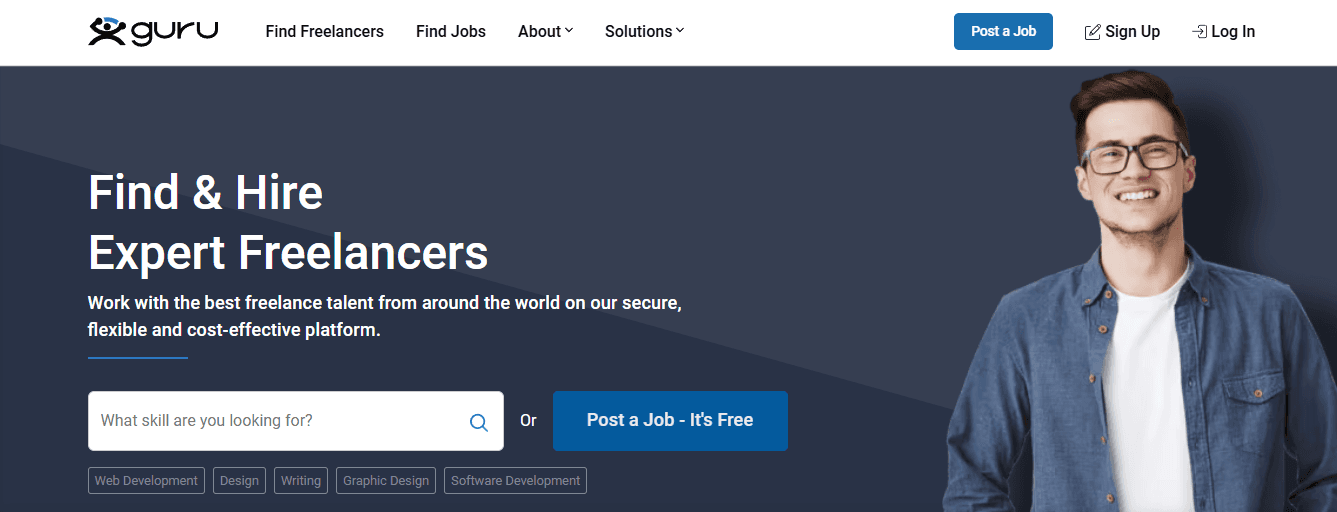
A freelance platform with a collaborative Workroom for file sharing, milestones, and communication.
Pricing trends: Flexible, with hourly and milestone models. Key benefits: built-in project workspaces and multiple payment options.
Pros: Stable long-term freelancer relationships, good for repeat engagements.
Cons: Smaller mobile-specific pool than top marketplaces.
Best for: Teams that want structured collaboration with individual contractors.
How it addresses hiring pain: Centralizes communication and deliverables to reduce ambiguity across handoffs.
11. SimplyHired
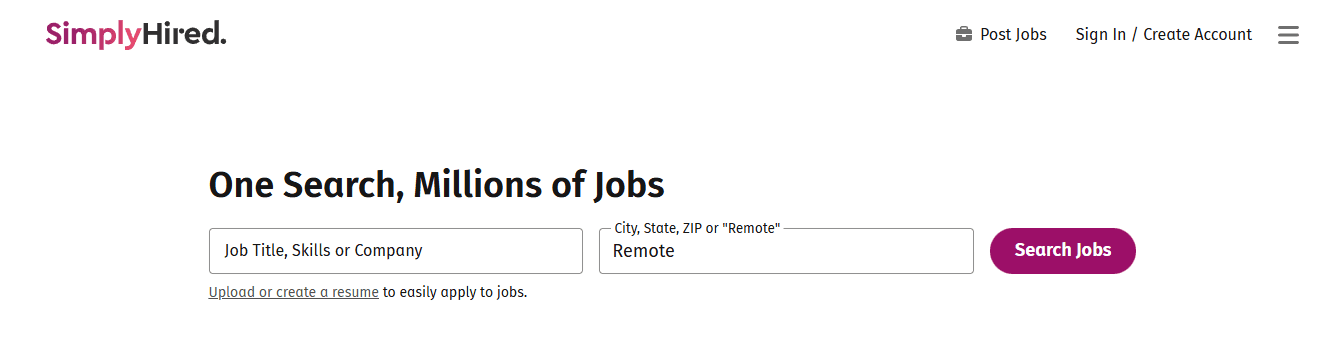
An aggregator and job search engine that pulls listings from many sources, with filters for location and salary.
Pricing trends: Low to no posting fees for distribution, useful for volume sourcing.
Key benefits: Breadth of listings and salary estimator.
Pros: Quick market benchmarking for compensation.
Cons: Less curation and vetting.
Best for: Supplementing other sourcing channels or running broad candidate searches.
How it addresses hiring pain: Gives salary visibility and candidate volume without heavy vendor overhead.
12. Hired
Candidate-first marketplace where developers create profiles and employers reach out; includes salary transparency.
Pricing trends: Pay-per-interview or subscription models with premium sourcing.
Key benefits: Targeted tech talent and straightforward outreach.
Pros: Streamlined engagement and reduced outbound effort.
Cons: The candidate pool may be biased toward actively seeking talent.
Best for: Quickly filling mid- to senior full-time roles.
How it addresses hiring pain: Flips the sourcing burden, shrinking time-to-offer for vetted candidates.
13. Arc.dev
A vetted platform that runs a three-stage assessment and presents candidates within 72 hours, with flexible engagement models and a risk-free trial.
Pricing trends: Hourly rates typically range from $40 to $140 plus an 11 percent fee.
Key benefits: Modern framework expertise and quick matching.
Pros: Solid for React Native and Flutter needs, useful trial period.
Cons: Platform fee raises total cost, smaller pool than general marketplaces.
Best for: Companies that need pre-vetted developers with fluency in modern stacks.
How it addresses hiring pain: Reduces technical screening burden while offering short trials to validate fit.
14. 99designs
Design-first platform that can feed into development by delivering design contests or matched designers.
Pricing trends: Hourly rates and contest minimums provide a clear budget for design work.
Key benefits: Rapid generation of multiple design directions.
Pros: Strong UX outcomes and design guarantees.
Cons: Not ideal for complex backend integrations.
Best for: Consumer apps prioritizing interface and interaction design.
How it addresses hiring pain: Mitigates UX ambiguity early, so the engineering scope is clearer.
15. Dribbble
A portfolio-centric community primarily for designers, with access to designers who sometimes offer development capabilities.
Pricing trends: Premium rates for high-quality design talent.
Key benefits: Curated design work and trend awareness.
Pros: Discover standout UX talent and prototypes.
Cons: Limited pure development hiring infrastructure.
Best for: Hiring designer-developers for consumer-facing features.
How it addresses hiring pain: Reduces design handoff friction and improves UI-driven release predictability.
16. AngelList (Wellfound)
A startup-focused hiring platform where companies post roles and candidates apply, with support for equity compensation.
Pricing trends: No placement fees; costs are salary and equity.
Key benefits: Reach developers attracted to startup risk and growth.
Pros: Strong for early-stage hiring and equity offers.
Cons: Less ideal for enterprise hiring needs.
Best for: Startups seeking long-term full-time hires who want ownership.
How it addresses hiring pain: Aligns compensation models to retention priorities without extra platform fees.
17. Turing
A talent cloud that matches developers globally with a four-day average to fill roles and a reported 97 percent engagement success rate.
Pricing trends: Managed services and staff augmentation pricing, often with subscription or per-hire fees.
Key benefits: Fast matching, wide technology coverage, and managed engagement options.
Pros: Reduces interview time and operational burden.
Cons: Vendor dependency and variable regional availability.
Best for: Engineering teams that want staff augmentation with quality controls.
How it addresses hiring pain: Compresses hiring cycles and reduces interviewer workload, preserving product velocity.
18. LinkedIn
A professional network with job postings, InMail outreach, and recruiter tools, reaching over 875 million professionals.
Pricing trends: Paid postings and recruiter subscriptions, with higher costs for aggressive outreach.
Key benefits: Employer branding and passive candidate sourcing.
Pros: Reach, search filters, and direct outreach.
Cons: Noisy inboxes for candidates and potential low response rates without a strong employer brand.
Best for: Senior hires and building employer presence.
How it addresses hiring pain: Exposes passive talent who otherwise would not apply, helping fill roles that require rare product experience.
19. Intellectsoft
Enterprise software firm offering mobile development, legacy modernization, and API integration with full lifecycle support.
Pricing trends: Enterprise-level contracts with multi-phase delivery.
Key benefits: Enterprise processes, compliance, and long-term roadmaps.
Pros: Strong governance and domain expertise.
Cons: Higher cost and longer procurement cycles.
Best for: Regulated industries or companies requiring system integrations.
How it addresses hiring pain: provides maturity and governance to help teams avoid compliance surprises as they scale.
20. Appvales
A boutique firm focused on end-to-end mobile app development, with a majority of senior and mid-level engineers.
Pricing trends: Mid-market rates aligned to engineer seniority and project scope.
Key benefits: High-quality engineers, clear communication, and robust testing practices.
Pros: Hands-on delivery and responsiveness.
Cons: Limited bench for very large programs.
Best for: Mid-size projects where responsiveness and senior craft matter.
How it addresses hiring pain: Gives predictable delivery with senior-heavy teams, reducing post-launch firefighting.
21. App Marketplaces and Job Aggregators (Combined View)
This category includes aggregators that pool listings from multiple sources to maximize reach.
Pricing trends: Low posting fees and pay-per-click options.
Key benefits: Volume sourcing and market salary benchmarking.
Pros: Quickly identify passive and active candidates.
Cons: Surface area increases noise and screening time.
Best for: Building a broad funnel during heavy hiring phases.
How it addresses hiring pain: Widens candidate reach, enabling you to build a robust, prioritized interview pipeline.
Related Reading
• Software Development Rates by Country
• How to Find NFT Developers
• How Much Does It Cost to Hire a Software Developer
• How to Hire a Web Developer
• How to Hire a Full Stack Developer
• How to Hire Front End Developer
9 Mistakes to Avoid When Hiring Mobile App Developers

1. Not Verifying Their Background or Work
Require two production app links and one repo with CI history, and request a one‑page release timeline showing the last 12 months of feature ownership, crash-rate changes, and time-to-fix for one incident.
Run a 60-minute live walkthrough where the candidate explains a specific bug they owned, demonstrates the fix commit, and points to the tests that caught it. Use a simple scoring rubric: operational metrics (40%), code hygiene and tests (30%), and product judgment (30%).
Make a quick smoke test part of your gate: Install their listed app, run the top three user flows, and record performance and update dates before moving forward.
2. Hiring the First Developer You Find
Always interview at least three finalists and compare them with the same scorecard. Set an internal deadline for making an offer, for example, seven business days after the first interview, so you move deliberately but with speed.
Use one paired-programming session against a real repo to see how they reason about tradeoffs, not just whiteboard answers. Treat the session as part of the evaluation, not a courtesy.
3. Prioritizing Cost Over Quality
Build a simple six‑month Total Cost of Ownership model that includes estimated rework hours, expected support time, and onboarding effort, then compare it to the headline rate.
De-risk with a paid two-week pilot that has clearly defined deliverables, acceptance criteria, and a small completion bonus for meeting quality targets. That minimizes upfront risk while revealing real velocity.
Keep product fragility in mind: over 50% of mobile apps are uninstalled within the first month of download, indicating that early user loss occurs quickly. Quality at launch matters to retention.
4. Poor Communication
Set explicit communication SLAs in the contract: expected async response time, weekly status notes, and a required Day‑1 90‑minute kickoff with PM, designer, and tech lead.
Onboard with a 5‑item documentation checklist that the candidate must complete in week one: architecture diagram, deployment steps, test runbook, ownership matrix, and one initial monitoring alert. Those docs are both governance and a test of their discipline.
Require a sample PR description for the pilot task, scored for clarity, rationale, and rollback plan.
5. Ignoring the Full App Life Cycle
Ask candidates to present a 30/90/180 day post-launch plan during the interview, including monitoring, scheduled maintenance windows, and a prioritized tech‑debt list with estimated hours.
Include a maintenance SOW as part of the engagement, with defined deliverables and response times for high, medium, and low-severity bugs.
6. Rushing Development Timelines
Require a short technical spike before firm estimates, timeboxed to one week, and paid, that produces a testable artifact and a concrete risk register.
Publish a milestone calendar with acceptance tests for each milestone, and insist on automated checks for gating merges. If a vendor promises unrealistic timelines without a spike, treat that as a red flag.
7. Repeating the Same Mistakes
Define a kill clause in your contract tied to the pilot metrics: missed deliverables, poor communication, or failure to meet QA standards within the trial week should trigger an immediate transition plan.
If you replace a vendor, require two transfer rituals: A one-week overlap with the new team and a final knowledge-transfer session covering architecture, CI, and current issues. That prevents the costly rewrite spiral.
8. Forgetting About the Future
In interviews, ask for a one‑page migration plan for the next major scaling step, for example, supporting 10x active users or adding payments. Require descriptions of feature flags, modularity, and how they would rollback risky launches.
Score candidates on their demonstrated ability to plan for platform migrations or cross-platform expansions, not just on today’s feature list.
9. No Post-Launch Strategy
Contractually require an initial post-launch support window of 60 to 90 days with defined SLAs, on-call rotation, and a triage cadence that maps to your incident priorities.
Demand a handover package at launch that includes monitoring alerts, runbooks, test coverage reports, and a three‑session knowledge transfer schedule. That prevents hide-and-seek when the first bug lands.
Remember that user forgiveness is limited: only 32% of users will give an app a second chance after a poor experience. This underscores the importance of post-launch commitment and rapid remediation.
Hire Top Mobile App Developers in 7 Days with Noxx
Hiring should accelerate your roadmap, not stall it. Consider Noxx the best place to hire mobile app developers when you want a predictable extension of your product team. Hiring the right mobile app developer doesn’t have to take months or cost a fortune. Noxx makes it easy to find, screen, and hire top-tier developers faster and smarter than traditional platforms:
AI-Powered Screening: Noxx automatically screens thousands of applicants to identify the top 10 developers tailored to your project needs in just 7 days.
No Risk, No Upfront Fees: You only pay a 3% placement fee if you hire, so there’s zero risk while accessing top talent.
Transparent Salary Insights: See salary expectations upfront and avoid overpaying, with costs up to 70% lower than typical US rates.
Quality Beyond Quantity: Unlike generic freelance marketplaces, Noxx ensures candidates have verified experience, proven technical skills, and reliable communication.
Focus on Fit, Not Sorting: Let the AI handle the heavy lifting while you interview and select the developer who’s the best cultural and technical fit for your team.
Join hundreds of companies that are hiring faster, saving money, and building better apps. Upload your job today and get access to the top 10 mobile app developers in just 7 days.
Related Reading
• How Much Does It Cost to Hire an App Developer
• Technical Screening Tools
• Software Engineer Hiring Trends
• Hire Financial Software Developers
• Developer Assessment Tools

Noxx is an AI recruiter for global hiring that delivers your top 10 candidates in 7 days and charges just 3% of the annual salary if you hire.