
21 Best Job Boards for Software Engineers To Hire Developers Quickly
Land your dream dev job today. We’ve ranked the best job boards for software engineers based on salary transparency and remote work.
Every hiring manager who hires a developer knows the pain of scrolling through unqualified applicants and paying for posts that never land the right candidate. Choosing the best job boards for software engineers can reduce time and costs by connecting you to developer job sites, niche job boards, and tech hiring platforms where frontend, backend, full-stack, and remote engineers actively look for work. Where should you post to quickly find senior talent, fill your hiring pipeline, and stop wasting time on resume screening?
To help, hire a developer’s posting service utilizes an AI recruiter to route your job to the most relevant recruitment platforms and developer communities, improving candidate sourcing and speeding up the hiring process.
Summary
Big boards and LinkedIn deliver reach at scale, but in 2023, 85% of recruiters using LinkedIn focused on outreach and amplified noise, reducing precision for technical roles.
Seventy percent of software engineers are passive candidates, so public job posts disproportionately surface active seekers and miss many senior, mission-aligned hires.
Curated job boards and community hubs narrow the signal-to-noise ratio, and the market already includes more than 21 niche job boards focused on developer hiring.
Remote-specific channels matter because over 50% of software engineers now work remotely, making time zone, work arrangement filters, and remote experience critical screening signals.
Run short pilots and 30-day tests, capturing three core metrics per board per role—apply rate, qualified-screen pass rate, and days-to-first-interview—to quantify signal-to-noise before committing budget.
Market pressure will persist: web developer employment is projected to grow 8% from 2023 to 2033, and there were roughly 222,600 U.S. web developer jobs in 2024, so volume alone will not shorten time-to-hire.
Noxx addresses this by screening 1,000+ applicants and returning a curated top-ten shortlist in seven days, with a 3% pay-on-hire fee.
Where Do Software Engineer Recruiters Typically Look for Talent (and What’s Missing)?

Traditional job boards, LinkedIn, agencies, and employee referrals do produce candidates, and they move fast when you need volume. The core gap is that those channels often prioritize quantity over proper technical fit.
To bridge this gap, many teams are now turning to an AI recruiter like Noxx AI to filter for actual engineering ability rather than just keyword matches.
Why Do Familiar Channels Feel Efficient But Still Miss The Mark?
The same issue surfaces across hiring teams: big boards are built for discovery, not precision. According to LinkedIn Talent Solutions, 85% of recruiters use LinkedIn to find software engineering talent, so outreach and impressions focus on a single network.
You can see this in practice by watching a Noxx AI demo, which illustrates how a specialized AI recruiter can filter out this noise to find mission-driven talent that larger platforms often obscure. Big platforms win for reach, not signal.
Who Are You Actually Reaching When You Post Publicly?
When teams rely on open applications, they mostly attract people actively looking, while most senior technologists are quietly employed. The Stack Overflow Developer Survey found that 70% of software engineers are passive candidates, meaning they are not actively looking for new opportunities, published in 2023, which explains why job posts alone rarely surface top-tier, mission-aligned talent.
If you want impact hires, you have to go where those people live and show real competence. Using an AI recruiter allows you to tap into these passive pools automatically. If you want to hire impact hires, Noxx AI helps you go where those people live and demonstrate real competence without manual, repetitive outreach.
Where Should Impact-Focused Software Engineers And Data Professionals Look Instead?
If mission alignment matters more than a flood of résumés, curated job boards, nonprofit hiring networks, fellowship programs, and community hubs get you closer, faster. These platforms filter for civic-tech, climate, public health, and education roles and surface teams that measure success by outcomes, not growth by headcount.
Think of general boards as a wide fishing net, and specialized channels as a spear: one pulls up volume, the other brings back the exact catch you wanted. For instance, Noxx AI is a dedicated AI recruiter that targets these “spear-like” communities, ensuring the developers you find are already vetted for the technical depth your project requires.
From High Volume to High Signal: How Curated Sourcing Unclogs the Funnel
Most teams rely on broad boards because they are familiar and quick to use. That works initially, but when you need technical depth and mission fit, hiring funnels clog:
Screening time balloons
Interviews repeat basic filters
Candidates who care about impact never surface
Platforms like curated sourcing tools, like AI recruiter:
Centralize vetted profiles
Technical portfolios
Targeted outreach
It shortens screening cycles and preserves interview bandwidth for candidates who already align with your mission and skill requirements.
How Do You Verify Technical Ability Without Wasting Time?
Use tangible signals that scale:
Public open-source contributions
Small paid trials
Paired programming sessions
Targeted take-home problems that mirror the actual work
Combine those with lightweight behavioral interviews that probe purpose and motivation. When you design assessments to reflect day-one work, you move from guessing competence to seeing it, and you give passive candidates a clear, low-friction way to demonstrate impact potential.
What Practical Sourcing Tactics Actually Find Passive, Mission-Driven Engineers?
Map communities first are more prosperous than generic résumé piles:
GitHub topics
Domain-specific Slack and Discord groups
Research labs
Conference speaker lists
Run focused outreach campaigns, invite a small cohort to project-based mini-sprints, and convert strong contributors into short-term contractors as a stepping stone to full-time roles. Those steps reduce risk for both sides and reveal working fit faster than abstract interviews.
The One Detail That Changes Everything: Moving from Job Post to Employer Story
To tailor the strategic narrative and examples precisely to your brand, paste your core positioning or share the URL, plus the primary audience and the three differentiators you want emphasized. Once you provide that, I will produce the two-part strategic narrative in the required format.
That pattern seems solved, until you discover the one detail that actually changes who shows up for the job.
Related Reading
21 Best Job Boards for Software Engineers

This is a practical, curated directory of job boards I trust for hiring software engineers, organized so you can quickly scan for fit.
Each entry explains:
Who should use it
The types of engineers it attracts
One clear strength and one limitation to set expectations
How These Boards Earned A Place Here
I included sites that consistently surface qualified engineering talent, offer useful filters or screening signals, and deliver repeatable hiring outcomes in real searches I’ve run or evaluated.
That means audience quality, active listings, and proper metadata like salary, seniority, or remote filters were weighted more heavily than raw traffic alone. Remember, there are over 21 job boards specifically for software engineers.
1. Noxx
Best for:
Fast, lower-cost sourcing when you need curated shortlists.
Attracts:
Screened candidates across:
Engineering
Marketing
Sales
Strength:
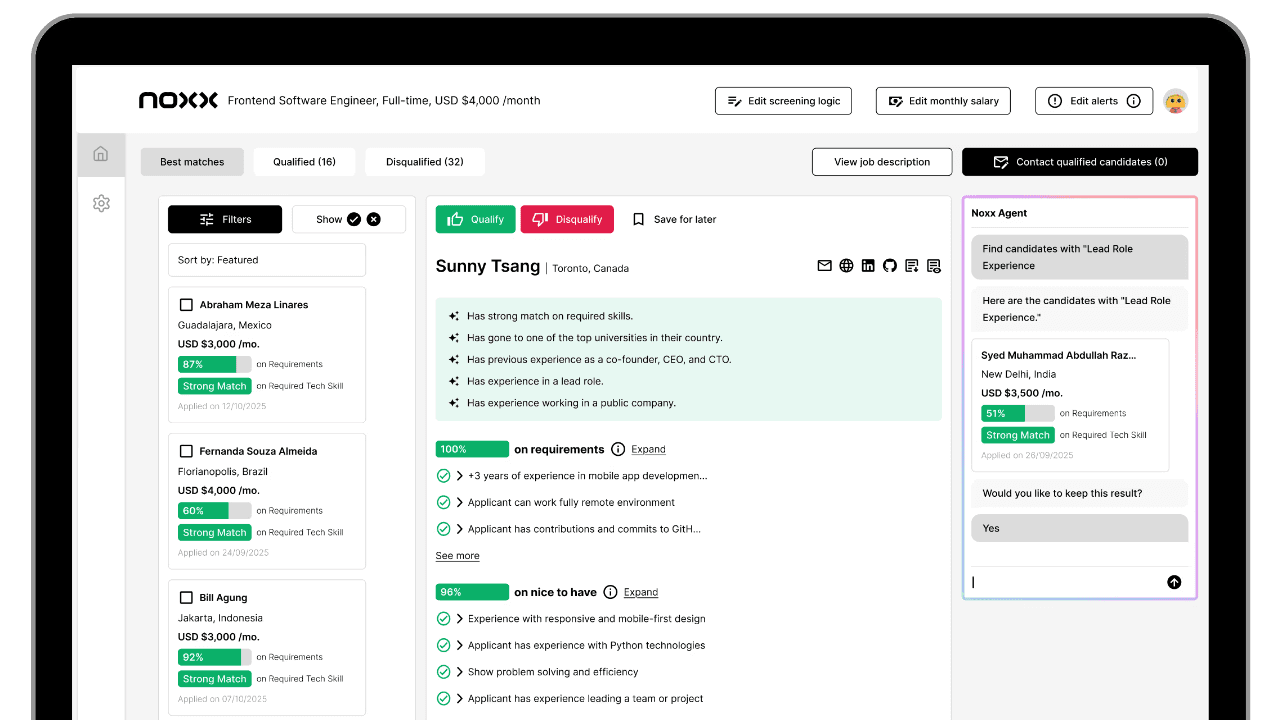
AI recruiter screens 1,000+ applicants and returns a top 10 list within 7 days, with pay-on-hire pricing tied to 3% of annual salary.
Limitation:
Relies on the quality of your JD and brief for the AI to match the mission fit.
2. Indeed

Best for:
Broad reach and high volume at the beginning of the funnel.
Attracts:
An extensive range, from junior devs to experienced engineers, actively searching.
Strength:
Powerful keyword and location filters plus employer reviews and salary estimates.
Limitation:
Volume can obscure the signal, so expect more screening to identify senior technical fits.
3. Wellfound (formerly AngelList Talent)
Best for:
Startups and candidates who prioritize equity and early-stage missions.
Attracts:
Startup-minded engineers and founders with product-market interest.
Strength:
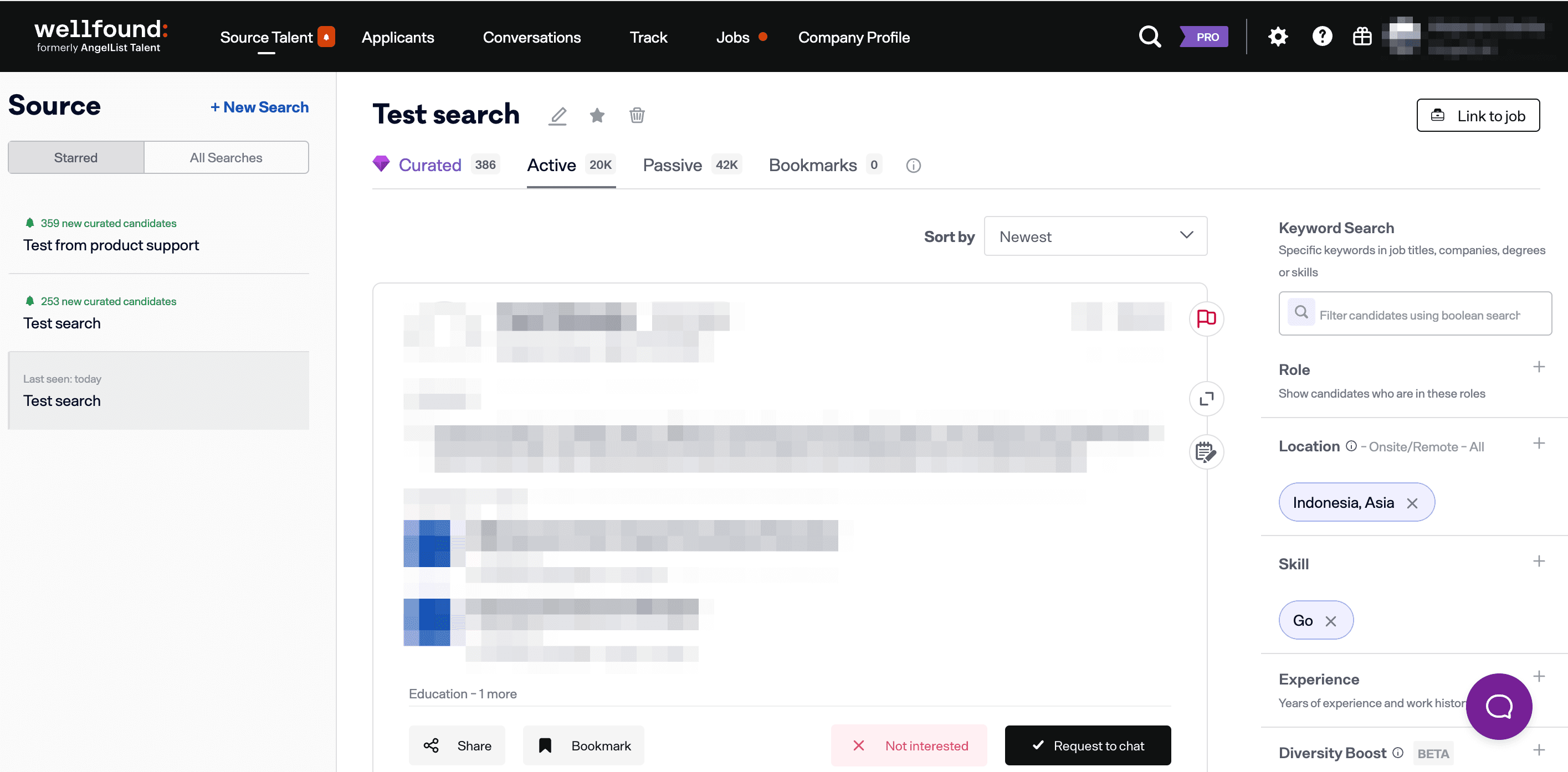
Apply once to 130,000+ startup roles and transparent salary signals.
Limitation:
Many applicants are startup-only, so that candidates may be more risk-averse.
4. Glassdoor
Best for:
Hiring when employer brand and interview experience matter.
Attracts:
Candidates who research company culture and interview processes.
Strength:
Candidate reviews reveal realistic expectations about management and on-call cycles.
Limitation:
Company ratings can skew perception and deter some applicants before conversations begin.
5. LinkedIn

Best for:
Sourcing passive talent and leveraging warm introductions.
Attracts: A full seniority range plus many engineering leaders who publicize work.
Strength:
Network visibility lets you identify mutual connections to accelerate outreach.
Limitation:
High recruiter competition and message fatigue reduce reply rates for generic outreach.
6. Crunchboard
Best for:
Tech startup roles with product- and media-savvy companies.
Attracts:
Engineers who follow TechCrunch and care about emerging startups.
Strength:
Focused tech audience with industry context baked in.
Limitation:
Less applicable for enterprise or heavily regulated engineering hires.
7. Dice
Best for:
Traditional IT and systems engineering hires.
Attracts:
Developers and IT pros who list specific technologies and certifications.
Strength:
Detailed filters for experience, salary, and tech stack.
Limitation: Fewer product-engineering or startup-first candidates.
8. Reddit Jobs

Best for:
Niche
Community-driven hiring
Developer advocacy roles
Attracts:
Candidates are active in specific subcommunities, often with opinionated tooling preferences.
Strength:
Access to passionate, engaged engineers in tight niches.
Limitation:
Sourcing requires community contextual knowledge and careful posting to avoid noise.
9. Monster

Best for:
High-volume roles and early-stage sourcing are used when you need a large number of applicants quickly.
Attracts:
A broad pool including mid-career and career-switching developers.
Strength:
Long history, robust job-seeker resources, and resume visibility.
Limitation:
Candidate quality varies widely; you should expect more upfront screening.
10. GitHub
Best for:
Hiring engineers who publish code and contribute to open source.
Attracts:
Hands-on developers with public repositories and demonstrable technical work.
Strength:
Direct visibility into:
Code
Contributions
Project history
Limitation:
Many strong engineers keep their work private, so GitHub favors public contributors.
Engineering Velocity: Why Slow Hiring is a Structural Delivery Risk
Most teams post widely because it feels quick and familiar. That approach works, but it often yields long screening cycles and weak technical signals when you actually need skilled engineers quickly.
Teams find that platforms like Noxx, which combine automated screening with concrete salary expectations and pay-on-hire pricing, compress sourcing time while preserving quality.
11. Google Jobs
Best for:
Discovery across many boards at once when candidates search casually.
Attracts:
Active searchers typing role queries into search engines.
Strength:
Aggregates listings into a single, searchable interface with location and role filters.
Limitation:
Aggregation means you must follow links to the original posting to assess freshness and fit.
12. Social Media
Best for:
Passive outreach and employer brand amplification.
Attracts:
Candidates who engage with your company's voice on Twitter, Instagram, and Facebook.
Strength:
Direct outreach and storytelling reach candidates who do not use traditional job boards.
Limitation:
The signal is noisy, and the brand must be present and consistent to convert interest into applications.
Solving the Time-Zone Paradox: Why Shared Hours Beat Shared Offices
With over 50% of software engineers now working remotely, remote-specific boards matter more than ever for filling distributed roles.
13. WeWorkRemotely
Best for:
Companies are hiring fully distributed engineers and product teams.
Attracts:
Candidates explicitly seeking remote-first arrangements.
Strength:
Huge visibility among remote job seekers, including senior technical hires.
Limitation:
Very popular, so standout job descriptions and employer brand help avoid low-quality applications.
14. PowerToFly

Best for:
Teams focused on diversity and matching underrepresented candidates with remote-friendly employers.
Attracts:
Vetted candidates who prioritize inclusive cultures.
Strength:
Curated employer programs and events aimed at retention.
Limitation:
Smaller candidate volume versus general remote boards.
15. Remote OK
Best for:
Startups and product teams want a high-traffic remote marketplace.
Attracts:
Developers comfortable with asynchronous and timezone-aware work.
Strength:
“Hot” rankings reveal which posts are gaining traction quickly.
Limitation:
Heat-based visibility favors companies that can post frequently or early.
16. Stack Overflow Jobs (Discontinued)
Best for:
Networking and community credibility, despite the discontinuation of job listings.
Attracts:
Technical experts who use Stack Overflow for problem-solving.
Strength:
The platform still provides a channel to engage with developers and recruit through community visibility.
Limitation:
You cannot rely on it for active job postings as you could previously.
17. Remote Co.
Best for:
Hiring while building internal remote-work practices and training.
Attracts:
Candidates who value remote work resources and professional development.
Strength:
Combines job listings with courses, coaching, and career tools.
Limitation:
Jobs may vary in quality, requiring careful vetting.
18. Remotive
Best for:
Engineers who want a hand-screened remote job feed and daily updates.
Attracts:
Engineers and DevOps people focused on remote-first companies.
Strength:
Curated job list and a reliable daily newsletter.
Limitation:
Smaller pool than the largest remote-only aggregators.
19. Dynamite Jobs
Best for:
Teams that value accurate, up-to-date remote listings and timezone filtering.
Attracts:
Candidates seeking clarity on hours and pay.
Strength:
Daily verification of openings to avoid expired listings.
Limitation:
Subscription model for deeper access can be a barrier for small teams.
20. TechFetch
Best for:
Companies are hiring for highly specialized IT stacks and contract roles.
Attracts:
Specialists in:
Java
Python
Cloud
AI
Salesforce
Similar domains
Strength:
Instant skill assessments and a DemandIndex for regional hiring signals.
Limitation:
UX feels dated and requires work to surface top passive candidates.
21. Levels.fyi
Best for:
Candidates and hiring managers who care about transparent compensation and leveling.
Attracts:
Engineers evaluating offers across companies and levels.
Strength:
Real-time salary, stock, and leveling comparisons plus negotiation coaching.
Limitation:
A focus on compensation can overshadow cultural or mission fit in early screens.
Precision over Popularity: Why “Wide Sourcing” Often Dilutes Engineering
Think of these boards like tools in a woodshop:
A handsaw for rough shaping
A plane for finishing
A chisel for detail work
A router for speed
Use the right tool for the cut you actually need.
What This List Does Not Do, And Why That Matters
I did not include sites with token developer listings or duplicate aggregator feeds that add friction rather than clarity. You should expect each board here to return either a measurable signal about candidate capability, direct access to code or work history, or a curated pool aligned with specific hiring constraints, such as remote work or diversity.
That simple distinction changes how you allocate sourcing time and screening energy, and it explains why combining two or three of these boards usually beats blasting a single generic posting.
The Quality of Hire Equation: Why Sourcing Strategy is Your Leading Indicator
That’s the set; next, we’ll examine how to pick the right board for your role and what screening signals actually predict on-the-job performance.
But the real challenge isn’t finding boards, it’s knowing which single choice will save weeks of false starts and catch the engineer who actually stays.
Related Reading
What to Look for in Web Developer Job Boards

Recruiters should pick job boards based on evidence, not by popularity:
Measure candidate quality
How the site validates skills
Reply and conversion rates
The real-time-to-hire you can expect
Weigh those against your hiring goals. If managing multiple boards manually feels inefficient, using an AI recruiter like Noxx AI can centralize this process by automatically routing your role to the highest-converting platforms. Run short pilots, compare the funnel numbers side by side, and prioritize boards that raise your signal-to-noise ratio for the specific role you need.
What Measurable Signals Show Whether A Board Actually Delivers Quality Candidates?
Start with funnel metrics you can collect in the first 30 days:
Applicants per posting
Percent who complete a skills screen
Interview-to-offer conversion
The share with demo work samples or GitHub profiles
For a practical look at how these metrics are tracked and optimized at scale, you can view a Noxx AI demo. Track retention at 6 months when possible; a board that delivers hires who stick tells you more than a high-application count.
For a quick heuristic, capture three numbers per board, per role:
Application rate
Qualified-screen pass rate
Days-to-first-interview
Compare them across boards to identify which consistently produce usable candidates.
How Should You Evaluate Skill Validation Features?
Look for boards that expose concrete evidence, not just résumé text.
Preferred features include:
Built-in coding assessments with pass/fail thresholds
Native links to code samples
Portfolio hosting integration
Customizable structured screening questionnaires
If a board lacks assessment tools, ask if their pipeline supports short paid trials or live pair-programming sessions; those convert a vague résumé into observable work in less than a week.
How Do Response Rates And Time-To-Hire Affect Where You Spend Budget?
Measure recruiter outreach response rates and applicant-to-screen conversion rates per board, as slow or low response rates quickly accumulate costs. You can significantly shorten this cycle, often finding your top 10 candidates in just 7 days, by requesting a Noxx AI demo. For senior hires, expect longer lead times but higher value per candidate; for mid-level roles, low days-to-offer matters more.
Run the duplicate job copy on two boards for a single role, then compare days-to-offer and cost-per-qualified-candidate after two weeks; that A/B tells you which board actually shortens hiring cycles rather than just creating more work.
What’s The Simplest Way To Calculate Signal-To-Noise And Cost Efficiency?
Use this quick calculator during pilots:
Signal-to-noise equals qualified candidates divided by total applicants.
Cost-per-qualified-candidate equals total spend divided by the number of qualified candidates.
Cost-per-hire equals total spend divided by hires.
Weigh those against role urgency and seniority. For example, a board that gives three qualified candidates for one hire in two weeks is usually better than one that yields 30 applicants but zero qualified matches after three weeks, even if the latter has higher traffic.
Which Board Capabilities Should Align With Specific Hiring Goals?
Match the board’s strengths to the hiring constraint you care about. If you need speed, prioritize boards with strong apply-on-platform flow and a pool of active seekers; if you need passive senior talent, prefer boards that support targeted outreach and profile discovery.
When diversity or remote work is a priority, check whether the board surfaces timezone and work-arrangement filters. Think of boards like camera lenses: some give a wide shot, others zoom in on the detail you care about. Use the lens that frames your hiring goal.
From High Volume to High Signal: How Curated Sourcing Unclogs the Funnel
Most teams post broadly because it feels quick. That approach works early on, but as you scale, fragmented responses and long screening cycles create a steady drag on engineering velocity.
Platforms like Noxx that:
Centralize vetted profiles
Provide automated skill filters
Enable short, paid trials to address that friction
It compresses screening cycles from weeks to days while preserving hiring quality.
How To Run A 30-Day Pilot That Actually Proves A Board’s Value?
Post identical job descriptions on two candidate-focused boards and one targeted niche forum, then send identical outreach templates.
Track:
The application rate
Percent passing a one-hour technical exercise
Reply rate to messages
Days-to-offer
After 30 days, score each board on a simple 0–5 rubric for:
Technical fit
Culture fit signal
Speed
Cost
Run the board that scores highest for the next role, and recheck quarterly to avoid stale assumptions.
Why Market Context Matters When You Evaluate Boards
Market supply changes what “good” looks like; when openings are plentiful, response rates fall, and passive sourcing becomes essential. For context, the Bureau of Labor Statistics projects employment of web developers and digital designers will grow 8% from 2023 to 2033, a sign that demand will stay high through the decade, and as of 2024, there were approximately 222,600 web developer jobs in the U.S., which helps explain why volume alone no longer guarantees a fast hire.
Use those trends to set realistic benchmarks for reply rates and sourcing effort.
Scaling Without the Drag: Turning Audit Data into Engineering Velocity
Run a 30-day signal test before buying a large package.
Measure apply-to-qualified and days-to-first-interview.
Prefer boards with native code/portfolio links or assessment integration.
Calculate cost-per-qualified-candidate and compare to an internal hiring benchmark.
Reassess after two hires to avoid optimizing for a one-off result.
I can build a shareable pilot template and scoring sheet you can run this week to compare three boards side by side. That simple experiment often uncovers one surprising lever few teams notice.
Upload a Job and Get 10 Candidates within 7 Days with Noxx (No Risk, No Upfront Fees)
We know slow pipelines:
Low-signal applicants
Steep upfront fees eat up recruiter time
Derail hiring momentum
Consider Noxx as a practical alternative: upload your job description, let the AI recruiter screen a large pool, and return a curated top-ten shortlist in seven days, with salary expectations shown up front, no upfront fees, and a pay-on-hire 3% charge only if you hire.
It helps you source quality engineers, marketers, and salespeople at up to 70% below US rates, turning noisy software engineering job boards into a focused, low-risk channel for technical recruitment.
Related Reading

Noxx is an AI recruiter for global hiring that delivers your top 10 candidates in 7 days and charges just 3% of the annual salary if you hire.